As vehicles become autonomous, visibility becomes critical
Published on
June 5, 2026
Words by
Vedika Daswani
This is part of a series exploring how Miru dynamic glass is being applied across industries including automotive, architecture, wearables, and autonomous systems.
Vehicles today are taking on more driving tasks than ever before. Automakers continue to expand the capabilities of Advanced Driver Assistance Systems (ADAS) and move toward increasingly assisted and autonomous driving.
Features such as lane keeping, automatic emergency braking, pedestrian detection, adaptive cruise control, and hands-free highway driving are all powered by ADAS. Together, they help vehicles monitor their surroundings, identify hazards, and support driving decisions in real time.
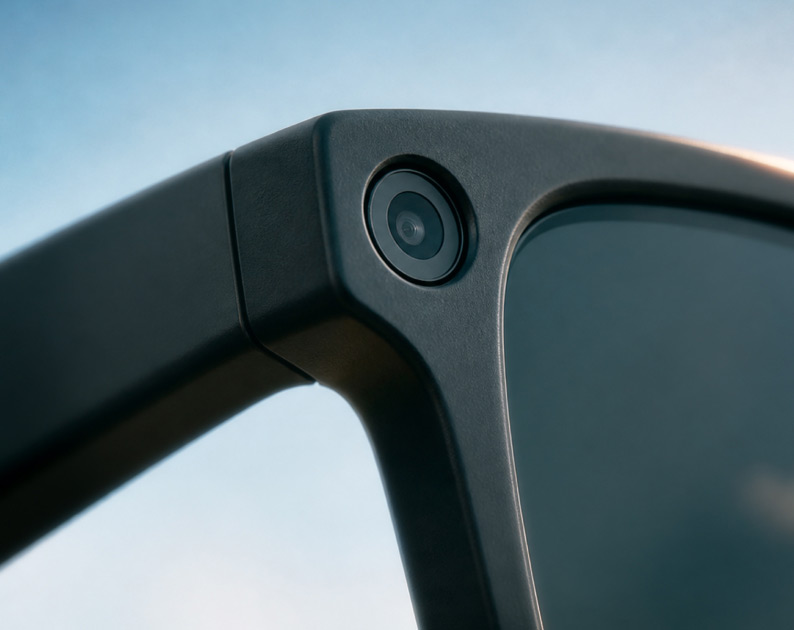
Cameras have become one of the most important safety systems on modern vehicles, enabling ADAS to “see” and understand the world around them.
Like the human eye, however, cameras are vulnerable to light and glare. Low sun angles, oncoming headlights, and strong reflections can reduce image quality and make it more difficult for systems to accurately interpret their surroundings.
Today, the glass surface protecting these cameras remains static. The surface allows all light to pass through, including the stray and scattered light that causes flare and reduces contrast. Static glass has increasingly become a limitation for camera-based safety systems.
The same dynamic glass platform behind Miru’s automotive and wearables applications applies here. Miru integrates electrochromic technology directly into the glass surface protecting ADAS cameras, managing incoming light before it reaches the sensors.
This creates two advantages:
Dynamic flare reduction: The dynamic glass responds to changing light conditions, including low sun angles, direct glare, and strong reflections, helping cameras maintain image quality and clarity under all lighting conditions.
Neutral color: ADAS systems rely on color information to interpret traffic signals, brake lights, road signs, and other critical visual inputs. Miru’s technology manages light without introducing significant color distortion.
ADAS performance ultimately depends on the quality of what the camera “sees”. By transforming sensor-facing glass into an intelligent surface, Miru helps create a more reliable foundation for the next generation of assisted and autonomous driving systems.
This is part of a series exploring how Miru dynamic glass is being applied across industries including automotive, architecture, wearables, and autonomous systems.
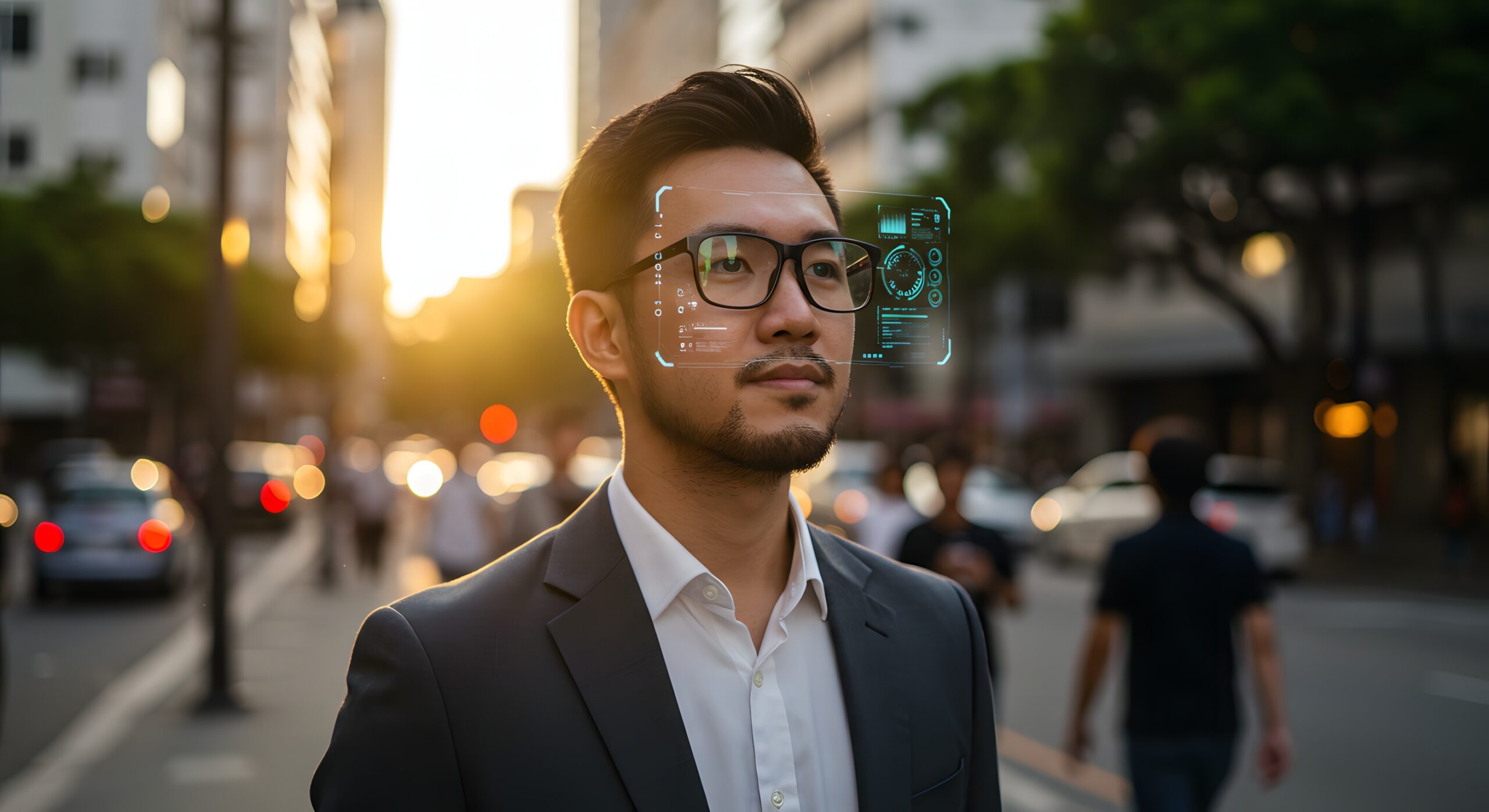
Smart glasses and augmented reality devices are moving into everyday environments, where they need to perform across bright sunlight, shaded streets, office lighting, vehicles, storefronts, and constant indoor-outdoor transitions. In each of these settings, one factor has an outsized impact on the user experience: light.
Bright sunlight washes out displays. Reflections reduce readability. Rapid transitions between indoor and outdoor environments create inconsistent viewing.
Many smart glasses today compensate with brighter displays, fixed tint, or added software processing. These approaches can help, but they can also increase power use, reduce comfort, and limit usability.
The better solution starts at the optical glass layer.
Wearable systems rely on transparent surfaces to layer or project digital information onto the physical world. Dynamically controlling glare, brightness, heat, and visible light transmission is critical to system performance.
This is where Miru sees a major shift emerging.
The next generation of wearable devices will not rely on static optical surfaces. They will require intelligent optical control that continuously adapts to changing environmental conditions.
Miru dynamic glass actively manages light in real time for wearable and augmented reality systems.
Our electrochromic platform reduces glare, improves display visibility, and maintains optical clarity across changing lighting conditions, while supporting thin, lightweight, low-power and curved form factors required for seamless wearable integration.
The future of wearables and augmented reality depends on how effectively these devices perform and interact with the physical world around them.
Miru is building the intelligent dynamic glass that drives that transition.
This is the first in a series exploring how Miru Dynamic Glass is being applied across industries including automotive, architecture, wearables, and autonomous systems.
In 2026, Miru will begin commercial deployment of its Dynamic Glass technology in automotive applications – the first major market for a platform designed to support a broad range of intelligent surface applications.
This milestone reflects a broader shift taking place across the automotive industry.
Modern vehicles are increasingly software-defined, sensor-driven, and optimized for performance. Yet the glass surrounding drivers, passengers, cameras, and sensors still behaves largely the way it always has: it either lets light and heat in, or blocks them entirely. Static glass forces the rest of the vehicle to compensate, from cabin cooling to glare management to sensor visibility.
Dynamic Glass changes the role glass can play in the vehicle.
Miru combines advanced electrochromic technology with intelligent control to create glass that actively responds to changing conditions in real time.
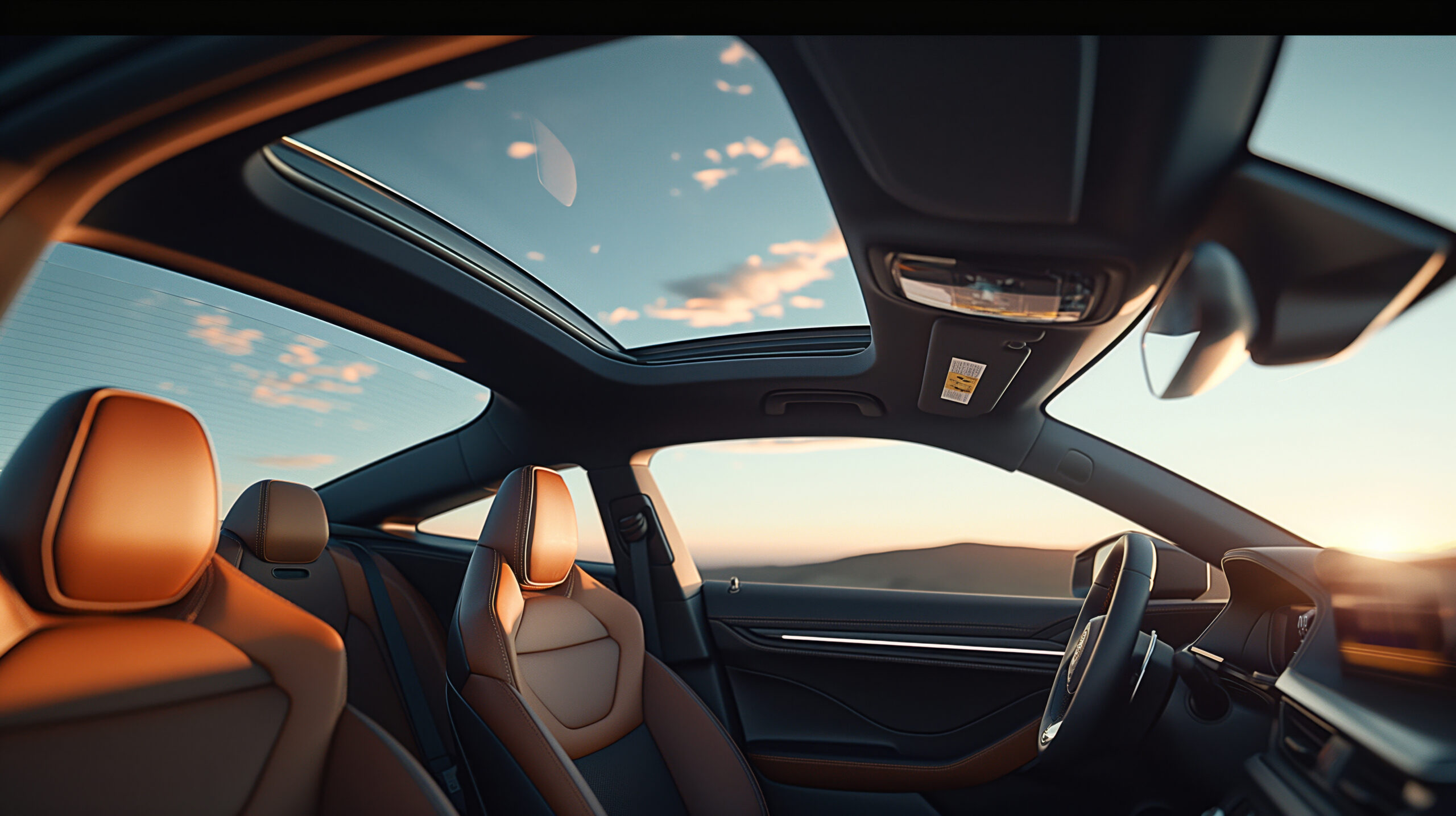
Panoramic roofs can adapt as sunlight shifts. Side glass can reduce glare without cutting occupants off from the outside world. Sensor-facing surfaces can support clearer, more consistent visibility across changing light conditions.
Smart glass is not one technology
Smart glass is often treated as a single category, but the differences matter.
Precise light control
Many smart glass systems are effectively clear or opaque. Miru’s technology enables continuous control of visible light transmission, allowing glass to be tuned smoothly as conditions change, enabling better management of glare, heat, comfort, and energy use.
Optical clarity matters
Drivers, passengers, cameras, and optical systems all depend on consistent visibility. Miru’s electrochromic layers are engineered to minimize haze and avoid color distortion, producing a neutral grey tint and clear, undistorted views.
Built for automotive scale
Performance is only part of the challenge. Automotive glass must be manufactured in large formats, curved geometries, and high-throughput production environments. Miru’s technology is designed to integrate with existing glass manufacturing and lamination lines, supporting the way automotive glass is already produced.
The future of vehicle glass is dynamic
Static glass is increasingly out of place in modern mobility.
As vehicles become increasingly intelligent, the materials surrounding them must evolve as well. Dynamic Glass represents a broader shift toward adaptive, responsive surfaces designed for the next generation of mobility.
Mativ and Miru Expand Partnership to Accelerate eWindow Commercialization for Automotive Markets
Published on
January 14, 2026
Words by
Vedika Daswani
ALPHARETTA, Ga., [January 14, 2026] – Mativ Holdings, Inc. (NYSE: MATV), a global leader in specialty materials, today announced an equity investment into Miru Smart Technologies (“Miru”), a leading smart window technology developer, to deepen their strategic partnership and prepare Miru for commercial production of its dynamic electrochromic window (“eWindow”) technology. This investment furthers the Miru-Mativ partnership as technical validation and commercial readiness work continues, targeting vehicle platforms.
Building on a history of successful co-development through Mativ’s advanced polymer film brand Argotec, this latest agreement signals a shift toward high-volume manufacturing alignment.
Key pillars of the strengthened partnership include:
Aligned growth plans: Synchronization between Miru’s 2028 mission of deploying 10 million square feet of eWindows with Mativ’s global extrusion capacity.
Capabilities and infrastructure: Optimizing operational framework to enable commercial production and meet stringent automotive performance standards.
Supply chain resilience:Integration of Argotec’s high-performance TPU-based films into Miru’s patented manufacturing process to meet the surging demand from automotive OEMs and architectural developers.
“Mativ pioneers engineered materials designed to tackle the world’s most complex challenges through innovation and a steadfast commitment to sustainability,” said Shruti Singhal, President and CEO of Mativ. “Building on our strong 2025 performance, this investment underscores our confidence in Miru’s technology and our shared goal to establish eWindows, integrated with Argotec technology, as the global standard for energy-efficient glazing.”
“Miru’s growth reflects the work of translating breakthrough technology into a production-ready vehicle platform,” said Curtis Berlinguette, Founder and CEO of Miru. “This progress has been shaped by close collaboration with our partners, and Mativ has played an important role in that journey. With this investment, we strengthen our manufacturing capabilities and supply chain to bring the next generation of smart windows to market.”
Miru’s eWindow technology, paired with Argotec’s optically clear polymer films, delivers a unique neutral tint, superior clarity and advanced solar heat control that can extend EV range by up to 10%.
Through its partnership with Mativ – showcased at Glasstec 2024 and Glass Performance Days 2025 – these innovations are quickly evolving into scalable, manufacturable solutions for industries such as automotive, building and construction, and other industrial applications.
–
About Mativ
Mativ Holdings, Inc. is a global leader in specialty materials, solving our customers’ most complex challenges by engineering bold, innovative solutions that connect, protect and purify our world. Headquartered in Alpharetta, Georgia, we manufacture on three continents and generate sales in over 80 countries through our family of business-to-business and consumer product brands. The company’s two operating segments, Filtration & Advanced Materials and Sustainable & Adhesive Solutions, target premium applications across diversified and growing categories. Our broad portfolio of technologies combines polymers, fibers and resins to optimize the performance of our customers’ products across multiple stages of the value chain. Our leading positions are a testament to our best-in-class global manufacturing, supply chain and materials science capabilities. We drive innovation and enhance performance, finding potential in the impossible. To learn more, visit mativ.com.
About Argotec
Founded in 1988, Argotec is the global leader in engineered polymer films. Argotec provides unparalleled extrusion capability, capacity, and quality controls to support businesses across the globe. Argotec films are a critical component in a wide variety of industries, including automotive, aerospace, aviation, building & construction, medical, dental, consumer goods, graphics, renewable energy, safety & defense, and more. From surface and paint protection to smart glass and wound care, Argotec innovates everyday products. To learn more, visit argotec.com.
About Miru Smart Technologies
Miru Smart Technologies develops electrochromic windows (“eWindows”) for the automotive, transportation and architectural sectors. Miru eWindows transform static glass into dynamic, responsive systems, disrupting industry standards with high performance, aesthetic and functionality. Miru is paving the way for the next generation of energy-efficient window technologies, with the vision to enhance the well-being of people and our planet. Learn more at mirucorp.com.
Contacts
Vedika Daswani, Marketing and Communications Manager
AI: The engine accelerating Miru’s path from lab to market
Published on
November 10, 2025
Words by
Vedika Daswani
This post is the second in our series on how AI and automation are reshaping material innovation at Miru.
————————————————————————————————————————————
In 2018, Miru’s Founder and CEO, Curtis Berlinguette, helped co-pioneer a self-driving lab – an autonomous R&D platform that combined robotics, automation, and machine learning to accelerate material discovery.
Today, that same DNA powers Adam, Miru’s Self-Driving Lab (SDL), which is redefining the pace of electrochromic innovation and how new materials become manufacturable products.
Equipped with advanced capabilities such as spray coating, solution mixing, a reactor, device imaging, and haze measurement systems, Adam can autonomously mix, deposit, cure, and analyze coatings with precision – before instantly planning and executing the next experiment.
This process compresses months of development into days. The result: Miru can rapidly discover and optimize formulations and product testing that make our dynamic electrochromic windows (“eWindows”) ready for development and scale-up.
Adam’s data-rich workflows feed directly into Miru’s product development and engineering pipelines. Each iteration teaches the system how variables – like Ink ratios, curing temperatures and deposition speeds – affect the real-world manufacturability of Miru eWindows.
That means process improvements discovered in the lab can move seamlessly from R&D to production. Every spray pattern, curing profile, and material stack is traceable, reproducible, and optimized – a foundation for consistent quality and rapid scale-up.
As Miru advances towards our mission to deploy 10 million square feet of eWindows by 2028, this digital thread between discovery and production ensures that we can scale without compromise.
Most innovations stall between the lab and the factory floor. At Miru, AI bridges that gap.
At Miru, innovation is not just about what comes out of our lab – it is how we make the discovery itself faster, smarter, and more scalable. That is where “Adam”, our groundbreaking AI-driven robot scientist, or self-driving lab, comes in.
Adam is accelerating how we discover and refine the advanced materials behind Miru’s dynamic electrochromic window (“eWindow”) technology. Electrochromic materials may look simple in action – tiny pulses of electricity tinting a window – but they involve millions of variables and years of iteration. Traditionally, it would take decades to move from breakthrough to market.
We decided to accelerate that timeline.
In 2018, our CEO, Curtis Berlinguette, and his team at the University of British Columbia built “Ada”, the world’s first fully autonomous self-driving labs. In collaboration with Jason Hein and Alan Aspuru-Guzik, and backed by an $8 million grant from Natural Resources Canada, Ada could mix, cast, process, test, and analyze materials – and then instantly adjust and repeat. What once took nine months could be compressed into five days.
Adam is the first generation of self-driving labs being used in the materials industry.
(“Ada” was named after Ada Lovelace; “Adam”, is the Ada-Miru iteration.)
Faster, more powerful, and always learning, Adam runs complex experiments continuously and with frequent microadjustments, freeing Miru engineers and scientists to focus on insights and strategy. Together, human ingenuity and AI speed are pushing the boundaries of what is possible in electrochromic technology.
The result: Miru is uncovering better materials at a record pace – developing smarter, more sustainable eWindows for cars, homes, and buildings around the world.
Miru’s mission is to enhance the well-being of people and the planet. Adam is one more way we are building that future, today.
Miru Welcomes Two Industry Veterans in Automotive Glazing and Glass Manufacturing
Published on
October 2, 2025
Words by
Vedika Daswani
Vancouver, Canada – October 2, 2025 – Miru Smart Technologies (“Miru”), a leading smart window technology developer, has welcomed two seasoned industry executives, Sasu Koivumaki and Andres Sarmiento, to its team on a fractional basis. Their expertise will accelerate Miru’s product development, manufacturing scale-up, and sector expansion as the company brings dynamic electrochromic windows (“eWindows”) to the automobile.
“Sasu and Andres bring decades of experience from the world’s most respected glass and automotive companies,” said Curtis Berlinguette, CEO and Founder of Miru. “They understand what it takes to bring breakthrough technology to market at scale – and they share our vision to make smart electrochromic glass a mainstream reality.”
Sasu Koivumaki is a seasoned glass industry leader and the former CEO of Glaston Corporation, the global equipment provider powering glass innovation, and a partner of Miru. He joins Miru to oversee operations at Miru’s Showcase Plant in Tampere, Finland, where the company recently unveiled its 1.5 m x 1.6 m panoramic electrochromic sunroof at Glass Performance Days. Sasu will expand Miru’s presence in Europe and support the company’s next phase of manufacturing growth.
“Miru’s technology is among the strongest I have seen in automotive glazing,” said Sasu. “The timing is right – the market is ready for dynamic glass at scale, and I am excited to help accelerate Miru’s path to adoption.”
Andres Sarmiento brings over 17 years of product development and manufacturing expertise from his tenure as Senior R&D Manager at AGP Group, a global leader in advanced automotive glazing. He has overseen technological deployments of programs, particularly for smart glass solutions, for OEMs including Volkswagen, Tesla, Rivian, GM, BMW and Audi. At Miru, Andres is leading qualification and scale-up, and supporting product development for eWindows, with a focus on advancing Miru’s automotive programs.
“I have spent my career helping automakers adopt new technologies into their vehicles,” said Andres. “What excites me about Miru is the chance to push smart glass from niche to mainstream, with a dynamic glazing technology that eliminates significant shape product restrictions while benefiting from the optical clarity advantages of electrochromic technology.”
After demonstrating its large-format panoramic electrochromic sunroof at Glass Performance Days 2025 in Finland this June, Miru is continuing to expand its eWindow portfolio beyond roof systems to side lites and additional glazing applications, scaling the value proposition for automakers. With new leadership on board, Miru is well-positioned to accelerate its automotive growth and bring dynamic glass into more vehicle platforms worldwide.
—
About Miru Smart Technologies
Miru Smart Technologies develops electrochromic windows (“eWindows”) for the automotive, transportation and architectural sectors. Miru eWindows transform static glass into dynamic, responsive systems, disrupting industry standards with high performance, aesthetic and functionality. Miru is paving the way for the next generation of energy-efficient window technologies, with the vision to enhance the well-being of people and our planet. Learn more at mirucorp.com.
Miru named a 2025 World Economic Forum Technology Pioneer
Published on
June 24, 2025
Words by
Vedika Daswani
Vancouver, Canada – June 24, 2025 — Miru Smart Technologies (“Miru”), a leader in dynamic electrochromic window technology, has been named a 2025 Technology Pioneer by the World Economic Forum, joining a global cohort of 100 companies driving innovation to tackle some of the world’s most pressing challenges.
The World Economic Forum’s Technology Pioneers community recognizes companies at the forefront of technological and business model innovation. Past members include household names like Google, Dropbox, and PayPal. The 2025 cohort – drawn from 28 countries – includes trailblazers in fields ranging from climate tech and AI to asteroid mining and carbon-free aviation.
Miru was selected for its breakthrough work in dynamic electrochromic glass (“eWindow”) technology, which dynamically adjusts to control light and heat. The technology unlocks new levels of energy efficiency and user experience in both automotive and architectural applications.
“This recognition by the World Economic Forum is a powerful endorsement of our technology and mission, and we are thrilled to join a global community of innovators shaping the future of smarter energy, mobility, and materials,” said Curtis Berlinguette, CEO and Founder of Miru.
As part of the Technology Pioneers program, Miru will engage in a two-year collaboration with the Forum, contributing insights to global initiatives.
This recognition also underscores the growing global relevance of Canada’s cleantech sector, with Miru joining 15 other Canadian companies honored since the program’s inception in 2000.
The World Economic Forum, committed to improving the state of the world, is the International Organization for Public-Private Cooperation. The Forum engages the foremost political, business and other leaders of society to shape global, regional and industry agendas (www.weforum.org).
About Technology Pioneers
Launched in 2000, the Technology Pioneers community marks its 25th anniversary in 2025 as a leading platform for early-stage companies from around the world that are shaping the future through breakthrough technologies and innovations. These companies are selected for their potential to have a significant impact on business and society and are invited to engage with public and private sector leaders through the World Economic Forum’s global platform.
The Technology Pioneers community is part of the Innovator Communities within the Forum’s Centre for the Fourth Industrial Revolution. The Innovator Communities convene the world’s leading global start-ups across different growth stages from early-stage Technology Pioneers to growth-stage Global Innovators and unicorn companies valued at more than $1 billion.
About Miru Smart Technologies
Miru Smart Technologies develops electrochromic windows (“eWindows”) for the transportation and architectural sectors. Miru eWindows transform static glass into dynamic, responsive systems, disrupting industry standards with high performance, aesthetic and functionality. Miru is paving the way for the next generation of energy-efficient window technologies, with the vision to enhance the well-being of people and our planet. Learn more at mirucorp.com.
Isoclima and Miru Announce Strategic Partnership to Accelerate Next-Gen Smart Glazing Adoption
Published on
June 5, 2025
Words by
Vedika Daswani
VANCOUVER, BC – ESTE, June 5, 2025 –Isoclima Group (“Isoclima”), a global leader in advanced transparent solutions, and Miru Smart Technologies (“Miru”), a leading smart window technology developer, have announced a strategic partnership to accelerate the global adoption of electrochromic windows across a diverse range of sectors including high-performance automotive, marine and aerospace.
eWindow sample at the Miru Tech Center in Vancouver, BC, Canada.
This partnership combines Miru’s dynamic electrochromic window technology (“eWindow”) with Isoclima’s deep expertise in high-performance glazing, unlocking new possibilities for industry-leading window solutions across premium and highly specialized markets. The result: a new class of intelligent, responsive solutions designed to meet the most demanding standards of aesthetics, energy efficiency, and performance. The partnership is grounded in a shared commitment to innovation, sustainability, and next-generation mobility.
“With this partnership, we’re integrating next-level electrochromic capabilities into our systems, pushing the boundaries of performance in the most demanding environments. With the integration of Miru’s eWindow technology, we are set to deliver enhanced comfort, visibility and energy performance for end users. Miru’s is a natural complement to our advanced glazing systems,” said Liviana Forza, CEO at Isoclima.
Isoclima product technology and processing.
“We are thrilled to partner with Isoclima – a global leader with a proven track record in shaping the future of advanced glass,” said Curtis Berlinguette, Founder and CEO of Miru. “Our eWindow platform is ready for scale, and Isoclima brings the technical depth and global reach to help bring our dynamic window technology to different sectors such as automotive, yachting, railway, and aviation.”
Miru eWindows enable seamless, on–demand tinting with ultra-low power requirements. Unlike traditional shading systems, electrochromic window technology allows energy-efficient control of sunlight and glare without additional bulky, moving parts. Miru’s solution offers uniform shading, optical performance, and is uniquely designed to integrate into curved surfaces – making it ideal for applications where weight, energy efficiency, and premium aesthetics are critical.
Isoclima’s portfolio spans custom glazing solutions for luxury vehicles, high-speed trains, defense and armored vehicles, yachts, aerospace and security architectural projects.
Isoclima and Miru will be participating in Glass Performance Days 2025 in Tampere, Finland (June 10–12). Miru’s eWindow technology will also be featured at the Paris Air Show (June 16–22) at the Isoclima booth (Hall 1 FG 321), showcasing how advanced glazing and smart tinting are coming together to define the next generation of design and performance.
—
About Isoclima Group
Isoclima Group is global leader in the design and manufacturing of high-performancetransparent solutions for applications across sectors such as Luxury and Sports Cars, Civilian Armored and Defense Vehicles, Helicopters and Aerospace, Yachting, Rail, and Security and Specialized Architecture. Renowned for its ongoing commitment to innovation and quality, Isoclima develops customized solutions that combine the highest standards of safety, design, and reliability, meeting the needs of prestigious clients worldwide.
About Miru Smart Technologies
Miru Smart Technologies develops electrochromic windows (“eWindows”) for the transportation and architectural sectors. Miru eWindows transform static glass into dynamic, responsive systems, disrupting industry standards with high performance, aesthetic and functionality. Miru is paving the way for the next generation of energy-efficient window technologies, with the vision to enhance the well-being of people and our planet. Learn more at mirucorp.com.
Recent Comments