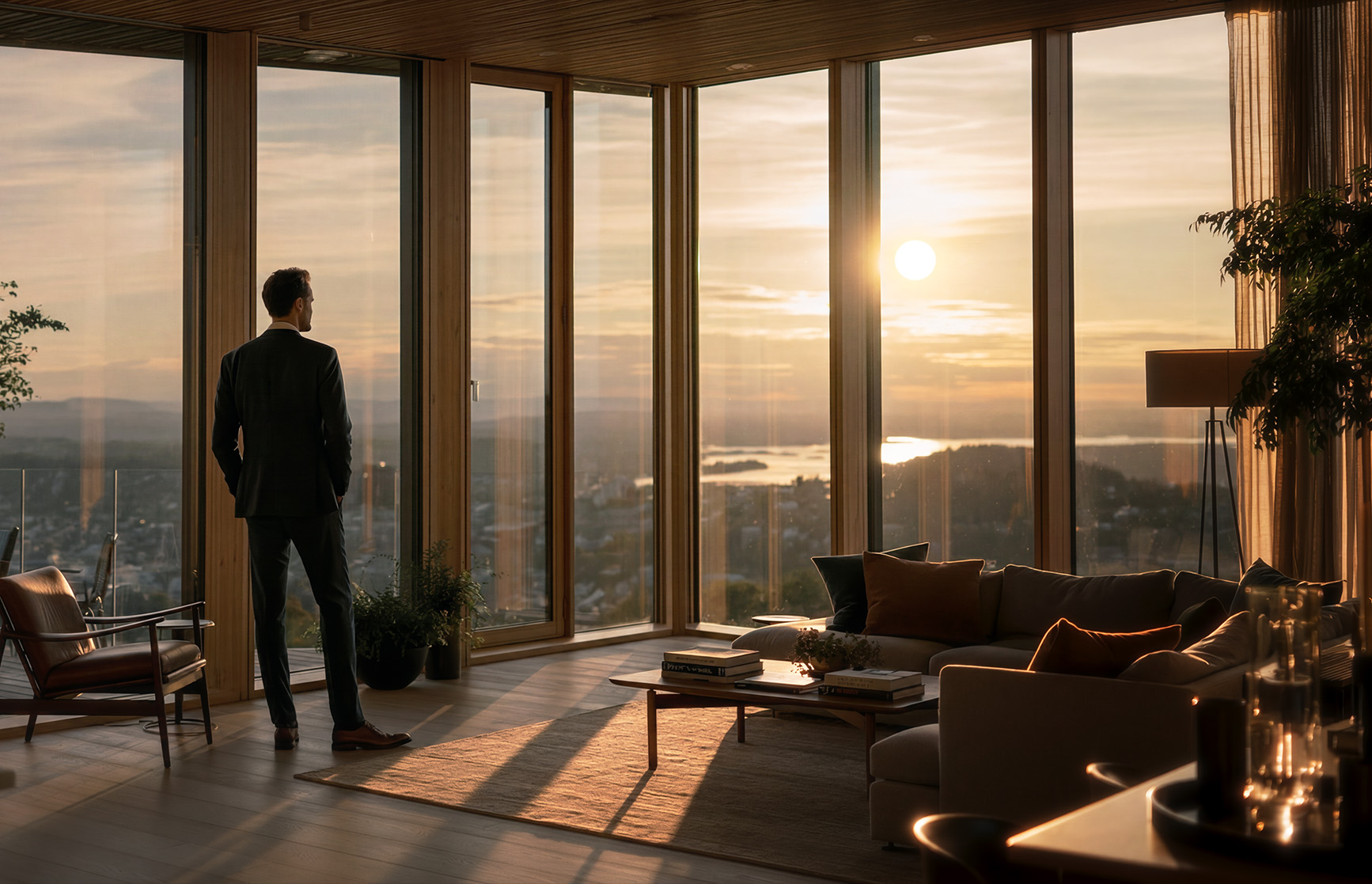
Man in a suit in a luxury apartment looking out large windows at the setting sun.

The future of windows is dynamic

This is part of a series exploring how Miru dynamic glass is being applied across industries including automotive, architecture, wearables, and autonomous systems. 

Buildings today depend heavily on glass. From skyscrapers to airports, academic buildings, and hospitals, expansive windows and glazing have become a defining feature of contemporary architectural design: expanding the view for those on the inside while connecting them with natural light from the outside. 

But with static windows and light come familiar challenges: glare, heat, and high energy bills.

Sharp sunlight creates glare, requiring the costly installation of shades that have breakable parts and spoil the aesthetics. Room temperatures soar, forcing climate-control systems to work overtime to keep the space comfortable, and in some cases, livable. Even in residential buildings, this push and pull boosts the electricity bill by 25 percent.

The environmental cost is also high. Heating, cooling, and lighting buildings accounts for 27% of global greenhouse gas emissions, while building operations generate more than 10 gigatons of CO₂ annually. Improving the performance of windows represents one of the most direct opportunities to reduce that impact.

Windows are overdue for a revolution. 

Not since the 1970s, when low-emissivity (“low-E”) windows first became available, has this critical architectural component been examined and adapted to reflect modern life. 

Low-E windows, which are tinted using thin films applied to glass, are still widely used today, but they are static. They do not react to conditions around them. Because windows are expensive to replace regularly, builders and customers need an adaptive solution that can change with the sun’s position.

Miru’s dynamic glass technology uses low-voltage electrical signals to switch the window’s tinting based on the amount of light coming through it. This can happen automatically, or can connect to Smart Home systems and work like a thermostat, letting users input their own settings. There are many advantages to this approach:

Improved durability.  We spray our solution between layers of glass, so there is no visible film applied to the outside. This means no bubbling, no unprotected edges, no degradation due to the elements – and therefore, longer warranties.

Better design flexibility. The spray method gives builders the freedom to use windows of all shapes and curvatures, which are increasingly employed in modern buildings. 

Enhanced aesthetics. Miru’s interlayer is completely colorless. With our ultra-low haze, window views can be enjoyed without interruption. 

Lower carbon footprint. Smart windows can improve a building’s energy efficiency by up to 20%. As adoption grows, dynamic glass has the potential to eliminate up to two gigatons of CO₂ emissions annually while creating more comfortable and sustainable buildings.

Crystal-clear, climate-friendly dynamic glass is the next critical step in reducing global energy consumption while providing its people with greater comfort, safety, and well-being. Miru’s dynamic glass technology is driving that revolution.

Explore how Miru dynamic glass is being deployed across different industries: https://mirucorp.com/industries/architectural/

As vehicles become autonomous, visibility becomes critical

As vehicles become autonomous, visibility becomes critical

This is part of a series exploring how Miru dynamic glass is being applied across industries including automotive, architecture, wearables, and autonomous systems. 

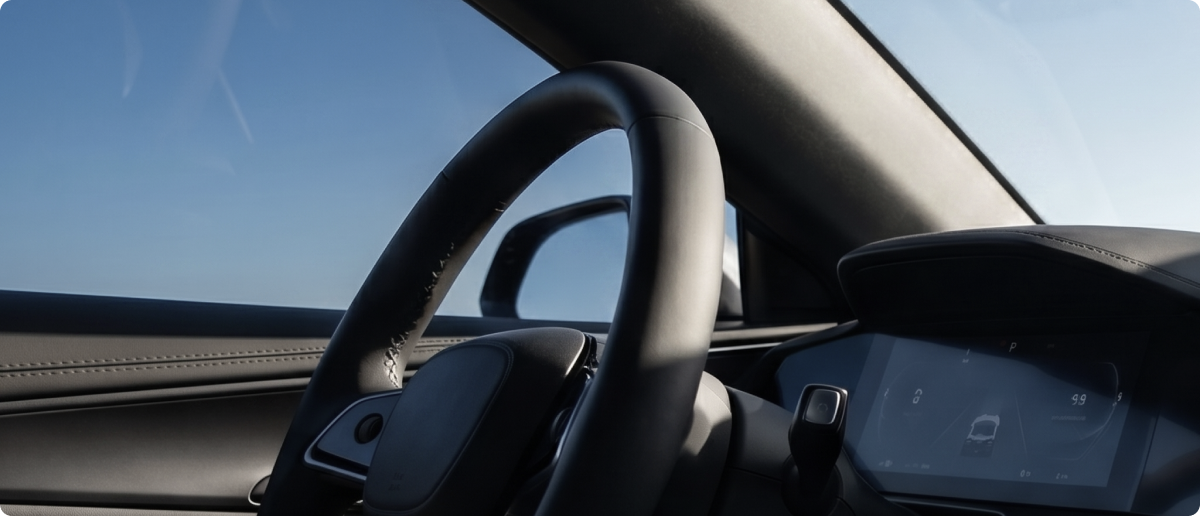
Vehicles today are taking on more driving tasks than ever before. Automakers continue to expand the capabilities of Advanced Driver Assistance Systems (ADAS) and move toward increasingly assisted and autonomous driving.

Features such as lane keeping, automatic emergency braking, pedestrian detection, adaptive cruise control, and hands-free highway driving are all powered by ADAS. Together, they help vehicles monitor their surroundings, identify hazards, and support driving decisions in real time.

Cameras have become one of the most important safety systems on modern vehicles, enabling ADAS to “see” and understand the world around them.

Like the human eye, however, cameras are vulnerable to light and glare. Low sun angles, oncoming headlights, and strong reflections can reduce image quality and make it more difficult for systems to accurately interpret their surroundings.

Today, the glass surface protecting these cameras remains static. The surface allows all light to pass through, including the stray and scattered light that causes flare and reduces contrast. Static glass has increasingly become a limitation for camera-based safety systems. 

The same dynamic glass platform behind Miru’s automotive and wearables applications applies here. Miru integrates electrochromic technology directly into the glass surface protecting ADAS cameras, managing incoming light before it reaches the sensors.

This creates two advantages:

Dynamic flare reduction: The dynamic glass responds to changing light conditions, including low sun angles, direct glare, and strong reflections, helping cameras maintain image quality and clarity under all lighting conditions.

Neutral color: ADAS systems rely on color information to interpret traffic signals, brake lights, road signs, and other critical visual inputs. Miru’s technology manages light without introducing significant color distortion.

ADAS performance ultimately depends on the quality of what the camera “sees”. By transforming sensor-facing glass into an intelligent surface, Miru helps create a more reliable foundation for the next generation of assisted and autonomous driving systems.

Explore how Miru Dynamic Glass is being deployed across ADAS, wearables, automotive and other industries: https://mirucorp.com/industries/autonomous-vehicles/

The future of wearables starts with smarter glass

The future of wearables starts with smarter glass

This is part of a series exploring how Miru dynamic glass is being applied across industries including automotive, architecture, wearables, and autonomous systems. 

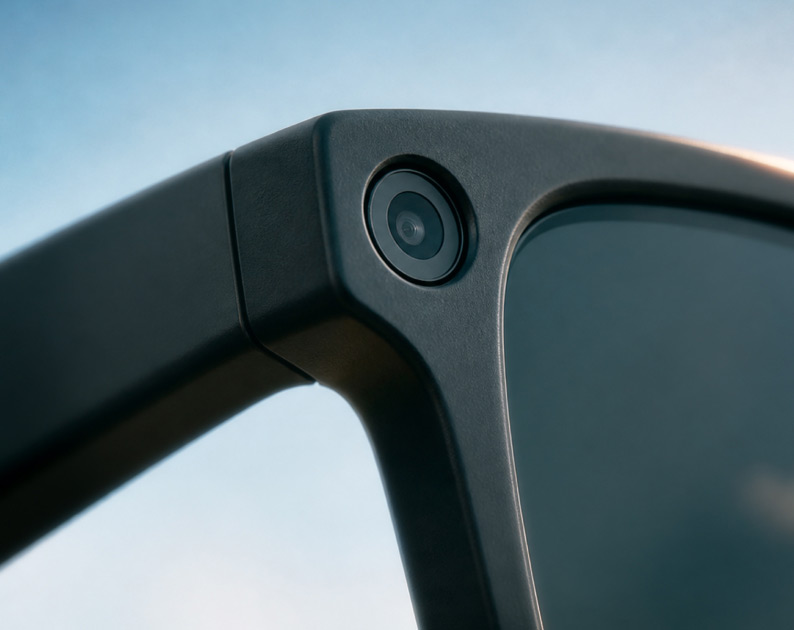
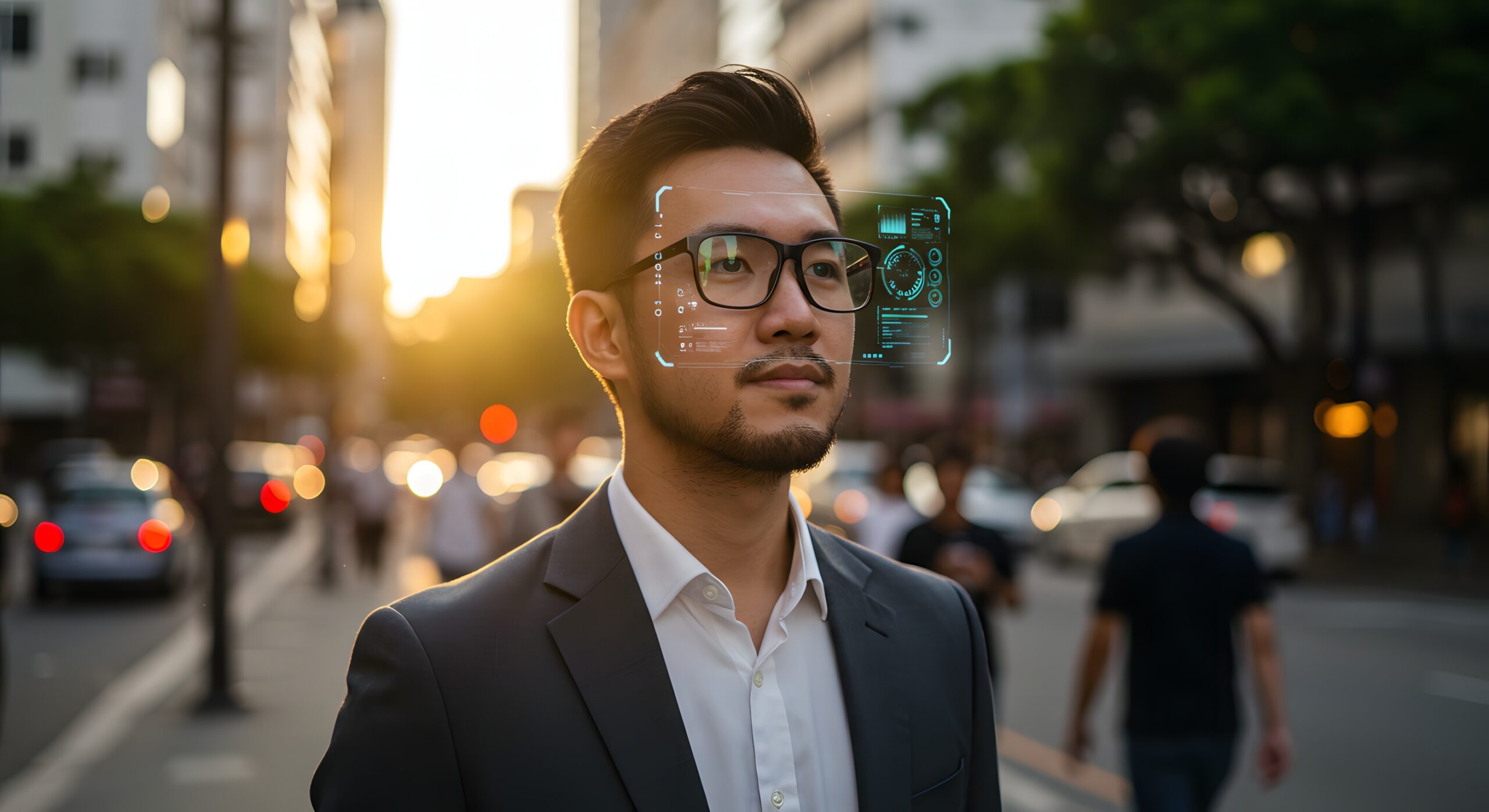
Smart glasses and augmented reality devices are moving into everyday environments, where they need to perform across bright sunlight, shaded streets, office lighting, vehicles, storefronts, and constant indoor-outdoor transitions. In each of these settings, one factor has an outsized impact on the user experience: light.

Bright sunlight washes out displays. Reflections reduce readability. Rapid transitions between indoor and outdoor environments create inconsistent viewing. 

Many smart glasses today compensate with brighter displays, fixed tint, or added software processing. These approaches can help, but they can also increase power use, reduce comfort, and limit usability.

The better solution starts at the optical glass layer.

Wearable systems rely on transparent surfaces to layer or project digital information onto the physical world. Dynamically controlling glare, brightness, heat, and visible light transmission is critical to system performance.

This is where Miru sees a major shift emerging.

The next generation of wearable devices will not rely on static optical surfaces. They will require intelligent optical control that continuously adapts to changing environmental conditions.

Miru dynamic glass actively manages light in real time for wearable and augmented reality systems.

Our electrochromic platform reduces glare, improves display visibility, and maintains optical clarity across changing lighting conditions, while supporting thin, lightweight, low-power and curved form factors required for seamless wearable integration.

The future of wearables and augmented reality depends on how effectively these devices perform and interact with the physical world around them.

Miru is building the intelligent dynamic glass that drives that transition.

Explore how Miru dynamic glass is being deployed across different industries: https://mirucorp.com/industries/wearables-augmented-reality/


Automotive glass is ready for its next evolution

Automotive glass is ready for its next evolution

This is the first in a series exploring how Miru Dynamic Glass is being applied across industries including automotive, architecture, wearables, and autonomous systems. 

In 2026, Miru will begin commercial deployment of its Dynamic Glass technology in automotive applications – the first major market for a platform designed to support a broad range of intelligent surface applications.

This milestone reflects a broader shift taking place across the automotive industry.

Modern vehicles are increasingly software-defined, sensor-driven, and optimized for performance. Yet the glass surrounding drivers, passengers, cameras, and sensors still behaves largely the way it always has: it either lets light and heat in, or blocks them entirely. Static glass forces the rest of the vehicle to compensate, from cabin cooling to glare management to sensor visibility.

Dynamic Glass changes the role glass can play in the vehicle. 

Miru combines advanced electrochromic technology with intelligent control to create glass that actively responds to changing conditions in real time. 

Panoramic roofs can adapt as sunlight shifts. Side glass can reduce glare without cutting occupants off from the outside world. Sensor-facing surfaces can support clearer, more consistent visibility across changing light conditions. 

Smart glass is not one technology

Smart glass is often treated as a single category, but the differences matter. 

  1. Precise light control

Many smart glass systems are effectively clear or opaque. Miru’s technology enables continuous control of visible light transmission, allowing glass to be tuned smoothly as conditions change, enabling better management of glare, heat, comfort, and energy use.

  1. Optical clarity matters

Drivers, passengers, cameras, and optical systems all depend on consistent visibility. Miru’s electrochromic layers are engineered to minimize haze and avoid color distortion, producing a neutral grey tint and clear, undistorted views.

  1. Built for automotive scale

Performance is only part of the challenge. Automotive glass must be manufactured in large formats, curved geometries, and high-throughput production environments. Miru’s technology is designed to integrate with existing glass manufacturing and lamination lines, supporting the way automotive glass is already produced.

The future of vehicle glass is dynamic

Static glass is increasingly out of place in modern mobility. 

As vehicles become increasingly intelligent, the materials surrounding them must evolve as well. Dynamic Glass represents a broader shift toward adaptive, responsive surfaces designed for the next generation of mobility.

Explore how Miru Dynamic Glass is being deployed across different industries: https://mirucorp.com/industries/automotive/

Mativ & Miru Expand Partnership to Accelerate eWindow Commercialization for Automotive Markets

Mativ and Miru Expand Partnership to Accelerate eWindow Commercialization for Automotive Markets  

ALPHARETTA, Ga., [January 14, 2026] – Mativ Holdings, Inc. (NYSE: MATV), a global leader in specialty materials, today announced an equity investment into Miru Smart Technologies (“Miru”), a leading smart window technology developer, to deepen their strategic partnership and prepare Miru for commercial production of its dynamic electrochromic window (“eWindow”) technology. This investment furthers the Miru-Mativ partnership as technical validation and commercial readiness work continues, targeting vehicle platforms.

Building on a history of successful co-development through Mativ’s advanced polymer film brand Argotec, this latest agreement signals a shift toward high-volume manufacturing alignment.

Since their initial joint development agreement in 2024, Miru and Mativ have achieved several technical and industry milestones, including developing one of the world’s largest compound-curved electrochromic sunroofs (1.5 m × 1.6 m) and fulfilling the first commercial purchase orders from major glass manufacturers in 2025.

Key pillars of the strengthened partnership include:

  • Aligned growth plans: Synchronization between Miru’s 2028 mission of deploying 10 million square feet of eWindows with Mativ’s global extrusion capacity. 
  • Capabilities and infrastructure: Optimizing operational framework to enable commercial production and meet stringent automotive performance standards.
  • Supply chain resilience: Integration of Argotec’s high-performance TPU-based films into Miru’s patented manufacturing process to meet the surging demand from automotive OEMs and architectural developers.

Mativ pioneers engineered materials designed to tackle the world’s most complex challenges through innovation and a steadfast commitment to sustainability,” said Shruti Singhal, President and CEO of Mativ. “Building on our strong 2025 performance, this investment underscores our confidence in Miru’s technology and our shared goal to establish eWindows, integrated with Argotec technology, as the global standard for energy-efficient glazing.”

“Miru’s growth reflects the work of translating breakthrough technology into a production-ready vehicle platform,” said Curtis Berlinguette, Founder and CEO of Miru. “This progress has been shaped by close collaboration with our partners, and Mativ has played an important role in that journey. With this investment, we strengthen our manufacturing capabilities and supply chain to bring the next generation of smart windows to market.”

Miru’s eWindow technology, paired with Argotec’s optically clear polymer films, delivers a unique neutral tint, superior clarity and advanced solar heat control that can extend EV range by up to 10%.

Through its partnership with Mativ – showcased at Glasstec 2024 and Glass Performance Days 2025 – these innovations are quickly evolving into scalable, manufacturable solutions for industries such as automotive, building and construction, and other industrial applications.

About Mativ

Mativ Holdings, Inc. is a global leader in specialty materials, solving our customers’ most complex challenges by engineering bold, innovative solutions that connect, protect and purify our world. Headquartered in Alpharetta, Georgia, we manufacture on three continents and generate sales in over 80 countries through our family of business-to-business and consumer product brands. The company’s two operating segments, Filtration & Advanced Materials and Sustainable & Adhesive Solutions, target premium applications across diversified and growing categories. Our broad portfolio of technologies combines polymers, fibers and resins to optimize the performance of our customers’ products across multiple stages of the value chain. Our leading positions are a testament to our best-in-class global manufacturing, supply chain and materials science capabilities. We drive innovation and enhance performance, finding potential in the impossible. To learn more, visit mativ.com.

About Argotec

Founded in 1988, Argotec is the global leader in engineered polymer films. Argotec provides unparalleled extrusion capability, capacity, and quality controls to support businesses across the globe. Argotec films are a critical component in a wide variety of industries, including automotive, aerospace, aviation, building & construction, medical, dental, consumer goods, graphics, renewable energy, safety & defense, and more. From surface and paint protection to smart glass and wound care, Argotec innovates everyday products. To learn more, visit argotec.com.

About Miru Smart Technologies

Miru Smart Technologies develops electrochromic windows (“eWindows”) for the automotive, transportation and architectural sectors. Miru eWindows transform static glass into dynamic, responsive systems, disrupting industry standards with high performance, aesthetic and functionality. Miru is paving the way for the next generation of energy-efficient window technologies, with the vision to enhance the well-being of people and our planet. Learn more at mirucorp.com


Contacts

Vedika Daswani, Marketing and Communications Manager

v.daswani@mirucorp.com