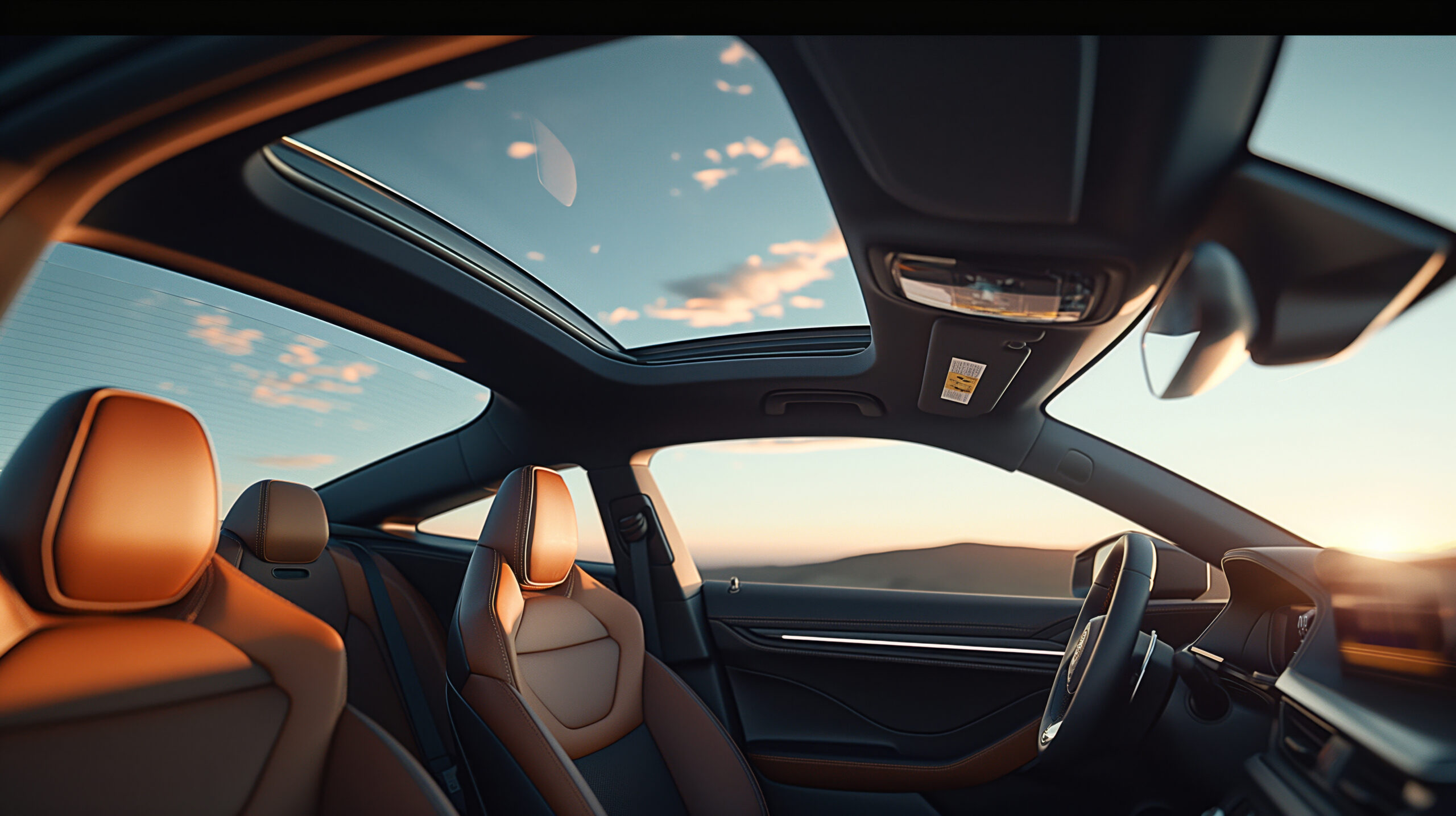
A growing number of vehicles on the market now offer electronically adjustable panoramic roofs and windows.
BMW introduced a switchable panoramic roof on the 2022 iX.
Renault has expanded its Solarbay roof across several models.
Ferrari’s Purosangue offers a full-length electronically adjustable glass roof.
While the technologies behind these systems differ, the direction of the industry is clear: smart glass is becoming a standard vehicle feature.
The market reflects that momentum.
Earlier this year, Renault reported that its Solarbay roof was selected on approximately 40% of Espace and Rafale models sold. Industry analyst Mordor Intelligence reported that sunroofs accounted for more than 73% of automotive smart glass applications in 2025. Electrochromic technologies represented the largest technology segment, accounting for 46% of the market.
Large panoramic roofs have become a defining feature across vehicles, particularly the premium and electric varieties, creating brighter, more open interiors. This also introduces new challenges around glare, solar heat and passenger comfort. Rather than relying solely on fixed-tint glass or mechanical sunshades, automakers are increasingly looking for glass surfaces that can actively adapt to changing conditions throughout the day.
The U.S. Department of Energy has identified advanced glazing as a technology capable of reducing the amount of solar heat entering a vehicle cabin. By managing solar energy before it passes through the glass, advanced glazing can help improve passenger comfort while reducing heat build-up inside the vehicle.
This is where electrochromic technology offers a compelling approach.
Electrochromic glass continuously adjusts the amount of light entering the cabin while maintaining outward visibility. Rather than simply switching between clear and dark, the glass can make gradual adjustments as sunlight changes throughout a journey, helping reduce glare while maintaining passenger comfort.
Miru is developing dynamic electrochromic glass specifically for large, curved automotive surfaces. The technology platform is designed to enable precise, continuously adaptive, low-powered control over incoming light, making the glass an active part of the in-cabin experience.
As smart glass becomes more ubiquitous across the automotive industry, the conversation is shifting from whether vehicles should incorporate dynamic glass to how it can deliver the greatest value. For automakers, the opportunity is to make those larger glass surfaces work harder and more intelligently for drivers and passengers alike.
Learn more about Miru dynamic glass for automotives here: https://mirucorp.com/industries/automotive/
Recent Comments