Miru announces fast-switching dimmable sunroofs

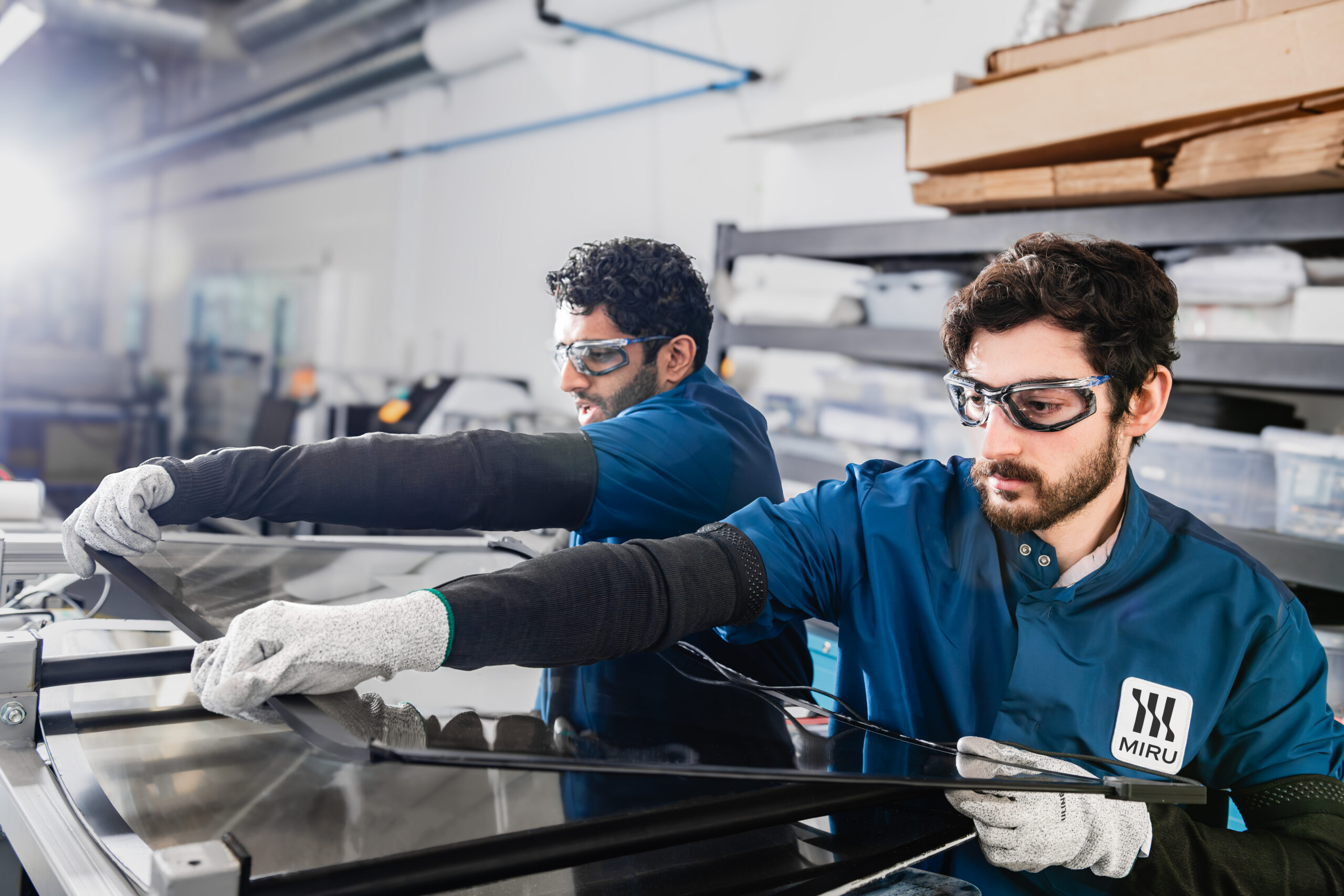
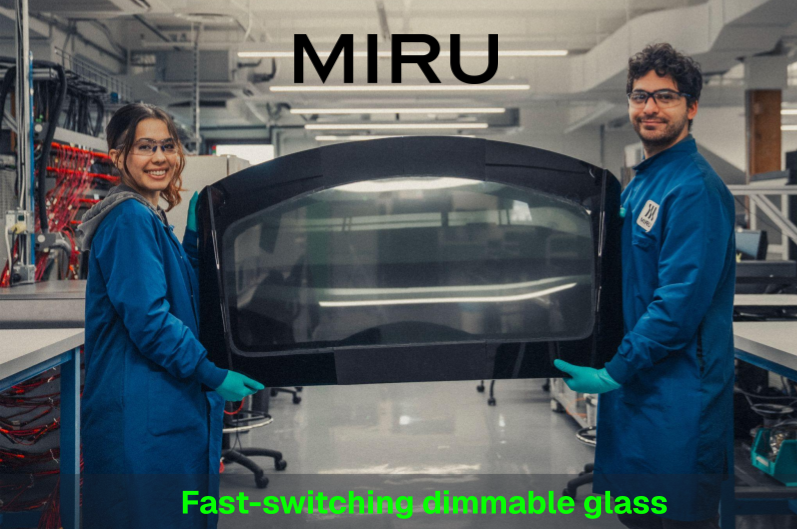
A panoramic sunroof made with dimmable glass from Miru Smart Technologies can now let twice as much light into the cabin in seconds. Even on large panels, the glass switches fully between clear and dark within a minute – 10× faster than existing electrochromic technologies – with a smooth, uniform transition from edge to edge.

As automakers bring more glass to the vehicle cabin, dimmable glass helps manage solar heat and glare while preserving the open feel of a panoramic roof. Miru’s technology accommodates large glass panels with complex curves, giving automakers the freedom to shape dimmable glass to the vehicle. Occupants benefit by being able to select any tint level between clear and dark for enhanced comfort, safety, and driving range.

“Our technical team has succeeded in making large panoramic roofs switch ten times faster while preserving the neutral color, optical clarity and durability automakers need,” said Curtis Berlinguette, Chief Executive Officer at Miru. “The faster switching provides a more responsive and engaging passenger experience.” 

“Our latest technology offers the fastest performance available anywhere in the market today,” said John Bass, Chief Technology Officer of Miru. “For the first time, automakers can access a dynamic glass solution that combines design freedom, high optical quality, and fast switching speeds in a single platform.”

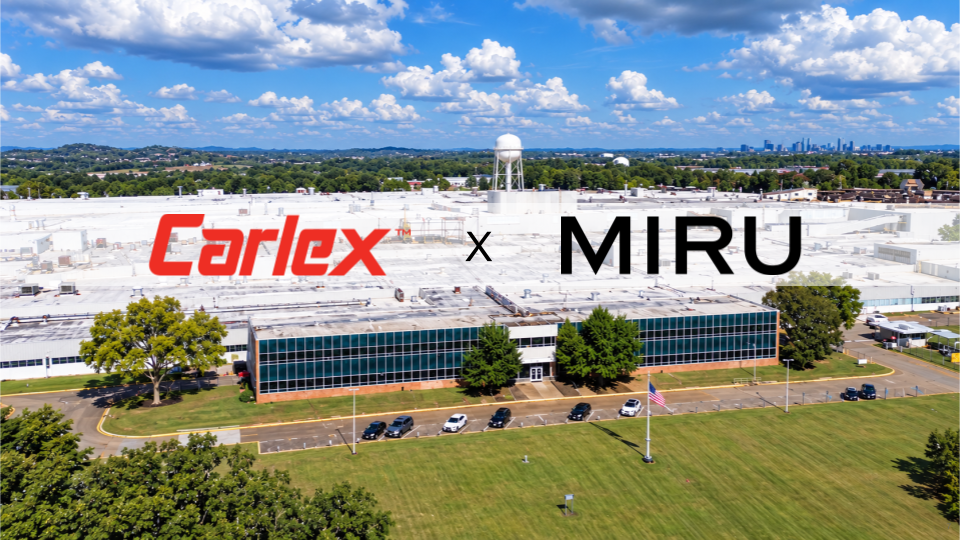
Miru is moving the technology toward commercial production through its previously announced partnership with Carlex Glass America, a global Tier 1 automotive glass supplier. The Miru manufacturing line at Carlex’s Nashville facility will support production of fast-switching dimmable glass, starting with automotive roof systems.

“The ability to control the light and heat coming through large glass roofs, along with faster switching times and uniform tinting, make dimmable glass an exciting offering for our customers,” said Mark Hebert, Chief Commercial Officer at Carlex Glass America. “Our recent investments into our equipment along with our partnership with Miru truly transform our Nashville facility into a fully vertically integrated, state-of-the-art manufacturing operation that already has a great reputation of supplying automotive glass with world class quality and delivery ratings.” 

—


Contact

Sharn Sodhi
s.sodhi@mirucorp.com

Carlex to bring Miru’s industry leading dimmable glass technology to automakers

Carlex, a premier global Tier 1 automotive glass manufacturer, and Miru, a developer of the industry’s leading dimmable glass technology and the only fully conformal solution on the market, entered into an agreement to implement Miru’s technology at Carlex’s manufacturing facility in Nashville, Tennessee. The facility is ideally situated to support Carlex customers across the United States.

Carlex announced the collaboration at the European Vehicle Glazing Innovation Summit 2026 in Stuttgart, Germany, highlighting joint development and manufacturing activities at Carlex’s facility to advance commercial production.

“We have built Miru’s dimmable glass technology to integrate into existing glass manufacturing lines,” said Curtis Berlinguette, Founder and CEO of Miru. “With Carlex, we are putting that approach into practice, starting with automotive roof systems and building toward additional applications across the vehicle.”

Through the collaboration, Carlex is adapting its manufacturing line to incorporate Miru’s dimmable glass processes. The work brings together Miru’s dimmable electrochromic technology and product expertise with Carlex’s capabilities in roof engineering, precision glass shaping, multilayer lamination and equipment design. The initiative forms part of Carlex’s broader development of advanced glazing technologies for automotive applications. 

“Advanced glazing technologies are creating new opportunities to improve the driving experience,” said Mark Hebert, Chief Commercial Officer of Carlex. “Working with Miru allows us to bring dimmable light control into our roof development programs, with a focus on the quality, performance, and manufacturing consistency automakers require.”

Miru’s technology electronically adjusts glass tint, allowing occupants to control incoming light and glare while maintaining a clear view. Its neutral grey appearance, very low haze and adjustable tint levels support automotive optical requirements. Applied after glass bending, the technology is the only fully conformal dynamic glass solution on the market capable of accommodating large, complex curved surfaces, giving automakers greater design flexibility. Beyond automotive glazing, Miru is developing the same light-control platform to enhance contrast in augmented reality (AR) and wearable displays, as well as manage light reaching robotic vision sensors.

The next phase of the Carlex–Miru collaboration will focus on manufacturing integration, complete roof system assembly and testing to establish the production processes and performance data needed for future automotive programs. The manufacturing line is designed to accommodate additional automotive glass applications over time.

—-

About Carlex Glass America 

Carlex Glass America is a premier Tier 1 manufacturer of original equipment and replacement automotive glass, supplying innovative glazing solutions to leading global automakers and aftermarket partners throughout North America. From precision-engineered windshields and sidelites to advanced panoramic roof systems and next-generation glass technologies, Carlex plays a critical role in advancing vehicle safety, performance and design.

Headquartered in Nashville, Tennessee, Carlex combines decades of manufacturing expertise with a strong commitment to innovation, operational excellence and continuous investment in U.S.-based manufacturing. With multiple production facilities and a highly skilled workforce, Carlex is dedicated to delivering exceptional quality while building the future of advanced automotive glass manufacturing.

About Miru Smart Technologies

Miru Smart Technologies is advancing how devices and vehicles see and interact with the world. Its dimmable electrochromic glass electronically controls light, heat, and glare, enhancing clarity in augmented reality (AR) and wearable displays, supporting robotic vision, and improving comfort and energy-efficiency in vehicles and buildings. 

Headquartered in Vancouver, BC, Canada, Miru combines advanced proprietary materials with manufacturing expertise to enable partners to bring dimmable glass into everyday applications. Learn more at mirucorp.com.

Media contacts

Sara Brown

sara@browntown.co

Sharn Sodhi

s.sodhi@mirucorp.com

Miru achieves industry first in automotive and architectural dynamic glass durability testing

 Miru Smart Technologies (“Miru”), a developer of dynamic glass technology, today announced a significant industry milestone: The successful completion of pre-Design Verification Plan (pre-DVP) durability testing, validated by a North American automotive Tier 1 supplier in September 2026.

Miru is now the first and only electrochromic glass technology company to pass both automotive and architectural durability testing. 

The pre-DVP automotive program evaluated Miru’s dynamic glass against the standard automotive qualification criteria, including impact resistance, heat resistance, humidity resistance, ultraviolet (UV) resistance, and electrochromic cycling durability. Achieving these benchmarks demonstrates that Miru’s technology is engineered to withstand the demanding environmental conditions experienced throughout a vehicle’s lifetime.

“Automotive and architectural applications demand exceptional durability, and Miru is the first electrochromic glass developer to pass testing in both markets” said Curtis Berlinguette, Founder and CEO of Miru. “Automakers need technology that meets their performance requirements. These results give them concrete evidence that Miru can deliver.”

Miru’s dynamic glass technology electronically adjusts glass tint to control light and glare while maintaining a clear view. Its neutral grey appearance and compatibility with different sizes, shapes and with complex curved surfaces support integration into automotive roof systems and other glass applications. The same light-control platform is also being developed by Miru to improve image contrast in augmented reality (AR) and wearable displays and manage light reaching optical sensors in robotic vision systems and autonomous vehicles.

Miru is under evaluation with several automakers, and the successful completion of pre-DVP satisfies one of the key criteria required for securing program awards. The validated pre-DVP results provide evidence of durability that automotive customers need when selecting technologies for future vehicle programs. 

Building the future of adaptive manufacturing

Case study: Building the future of adaptive manufacturing

As Miru prepares to scale dynamic glass for automotive, wearables, and future optical systems, we are focused on more than developing breakthrough materials. We are also building the manufacturing technologies needed to produce them at commercial scale.

Miru recently launched a GL-AI-ZE project to explore how artificial intelligence (AI) can make advanced manufacturing more efficient, consistent, and scalable. 

With support from NGen, Canada’s advanced manufacturing innovation network, the project brings together Miru’s dynamic glass technology with Mazlite’s industrial AI platform for spray and powder processes, and Innovative Finishing Solutions’ (IFS) expertise in robotic paintshop and finishing systems.

At the heart of the project is a simple idea: manufacturing should be able to adapt.

There are several ways to make a window smart. The most common approach involves applying a film to the glass that makes it responsive to light or other stimuli, but Miru’s approach is different: we spray our proprietary inks directly onto the glass for a more durable, flexible surface.

Producing Miru’s electrochromic coatings requires precise control over a complex spray coating process. Traditional manufacturing is often rigid, with a ‘set and forget’ approach. Advanced materials do not always behave in fixed ways. Small changes in the operating environment can influence how a coating is deposited, even when the equipment settings remain the same. This drift can lead to significant material waste and high defect costs.

GL-AI-ZE leverages AI to address this challenge. By applying machine learning to real-time data from the spray process , the system identifies deviations, and recommends or applies adjustments to maintain consistent coating quality. Instead of reacting to manufacturing issues after they occur, GL-AI-ZE continuously optimizes the process parameters as conditions change, creating a closed-loop AI system. 

For Miru, this approach supports the next phase of our commercialization. Smarter manufacturing can improve consistency, reduce waste, increase throughput, and help scale production across a global network of manufacturing partners. The project also aligns with Miru’s broader strategy of combining advanced materials with advanced manufacturing to accelerate the adoption of dynamic glass.

The impact extends beyond Miru. 

Many advanced manufacturing industries, from automotive and advanced optics to consumer electronics and precision coatings, face similar challenges as products become more sophisticated. Adaptive, AI-enabled manufacturing can improve quality, efficiency, and sustainability across these sectors.

The future of advanced materials and the future of manufacturing will evolve together. Projects like GL-AI-ZE are helping us build both.