Project OceanShade

Canada’s Ocean Supercluster Announces $11.7M Project OceanShade – Dynamic Electrochromic Marine Glass

VANCOUVER, BC, July 28, 2026 – Today, Canada’s Ocean Supercluster announced three new ocean innovation projects valued at over $25 million, including the $11.7 million Project OceanShade – Dynamic Electrochromic Marine Glass led by Miru Smart Technologies (Miru). This project is a collaborative initiative to design, develop, and validate Miru dynamic glass – a next-generation smart window system engineered for marine vessels.

This project will deliver a Canadian-designed and validated dynamic glass system for marine vessels that automatically adjusts window tint in response to changing light conditions. By actively managing glare and solar heat gain, Miru dynamic glass enhances visibility, passenger comfort, and vessel energy efficiency. The Project OceanShade consortium will develop marine‑adapted prototypes, conduct rigorous durability and certification testing, and assemble a complete technical package to support commercial deployment.

The consortium is led by Vancouver, B.C.-based Miru in partnership with Innovative Finishing Solutions in Orangeville, ON and Maple Advanced Robotics in Richmond Hill, ON. With a total project value of $11.7 million, Canada’s Ocean Supercluster is investing $4.1 million, with the balance of funding coming from project partners.

Project OceanShade positions Canadian innovators at the forefront of smart marine glazing, combining advanced materials with AI‑enabled manufacturing processes. The resulting technology will strengthen domestic supply chains, support vessel decarbonization, and open new export opportunities for high‑performance marine systems. This initiative underscores Canada’s growing leadership in sustainable maritime technologies and next‑generation vessel design.

Through Ambition 2035 and together with Canada’s ocean community, we are bold in our ambition to grow Canada’s ocean economy 5X to $220 billion by 2035. Continued investment in the accelerated development and commercialization of globally relevant, made-in-Canada ocean solutions will help us realize this ambition. Read more about recommendations to help achieve this transformational growth opportunity outlined in Charting the Course to 5X Growth in Canada’s Ocean Economy and the projected benefits to Canada here.

Media Contacts

Vedika Daswani
Miru Smart Technologies
v.daswani@mirucorp.com

Nancy Andrews
Canada’s Ocean Supercluster
nancy.andrews@oceansupercluster.ca

About Canada’s Ocean Supercluster

Canada’s Ocean Supercluster accelerates the development and commercialization of made-in-Canada ocean solutions in Blue Food, Arctic & Surveillance, Ocean Energy, and Marine Decarbonization, while also growing more companies, creating more jobs, and attracting ocean talent. As Canada’s national ocean cluster, the OSC is a convenor of members, partners, and networks and a catalyst for transformative growth that helps build the robust ecosystem needed to help realize Ambition 2035 – a 5X growth potential in ocean in Canada by 2035. To date, the OSC has approved almost 160 projects valued at more than $600 million, which will deliver more than 300 new made-in-Canada ocean products, processes, and services to sell to the world. Every dollar invested in Ocean Supercluster projects generates more than five times its value in GDP contribution, with the following economic benefits to Canada as of March 2025:

  • $1.7 billion in total economic output
  • $1 billion in GDP contribution
  • Nearly $748 million in total labour income
  • Close to 10,000 jobs created
  • $286 million in total tax revenues generated
  • $295 million in follow-on investment raised

Quotes

“Through investments in innovative projects across marine transportation and decarbonization, advanced manufacturing and sustainable seafood production, Canada’s Ocean Supercluster is supporting Canadian companies in developing and commercializing world-leading technologies. These initiatives will create jobs and opportunities for Canadian communities, expand exports, strengthen Canada’s global competitiveness and accelerate the growth of a stronger, more sustainable ocean economy. By supporting Canadian innovators today, we are ensuring that Canada remains at the forefront of the industries that will shape the future.”– The Honourable Mélanie Joly, Minister of Industry and Minister responsible for Canada Economic Development for Quebec Regions

“Project OceanShade is an excellent example of how Canadian innovation is accelerating the transition to cleaner, more energy efficient marine operations. By integrating advanced smart glass technologies into vessel design, this consortium is helping reduce fuel consumption, cut emissions, and improve onboard performance. Through solutions like Project OceanShade, homegrown technology is strengthening our supply chains, supporting vessel decarbonization, and positioning Canada as a global leader in sustainable maritime systems.” – Kendra MacDonald, CEO, Canada’s Ocean Supercluster

“Miru is building one dynamic glass platform that can be deployed wherever intelligent control of light creates value. With the support of Canada’s Ocean Supercluster and in collaboration with our Canadian partners, Project OceanShade extends that platform into the marine sector, validating our technology in one of the world’s most demanding operating environments, while accelerating the path toward commercial deployment.” – Curtis Berlinguette, Founder and CEO, Miru

“Project OceanShade demonstrates how Physical AI can accelerate the commercialization of Canadian next-generation manufacturing technologies. The future of advanced manufacturing is powered by intelligent, adaptive automation, and we are honoured to contribute our AI-enabled robotics platform to this important initiative.” – Dr. Yi Li, Co-Founder and Executive Vice President of Maple Advanced Robotics

“Innovative Finishing Solutions Inc. is pleased to partner with Miru and Maple Robotics on the Ocean Supercluster project. We look forward to collaborating with these innovative organizations and contributing our expertise in robotic finishing and handling systems to advance this important initiative.” – Brad Sparkman, President & CEO of Innovative Finishing Solutions Inc.
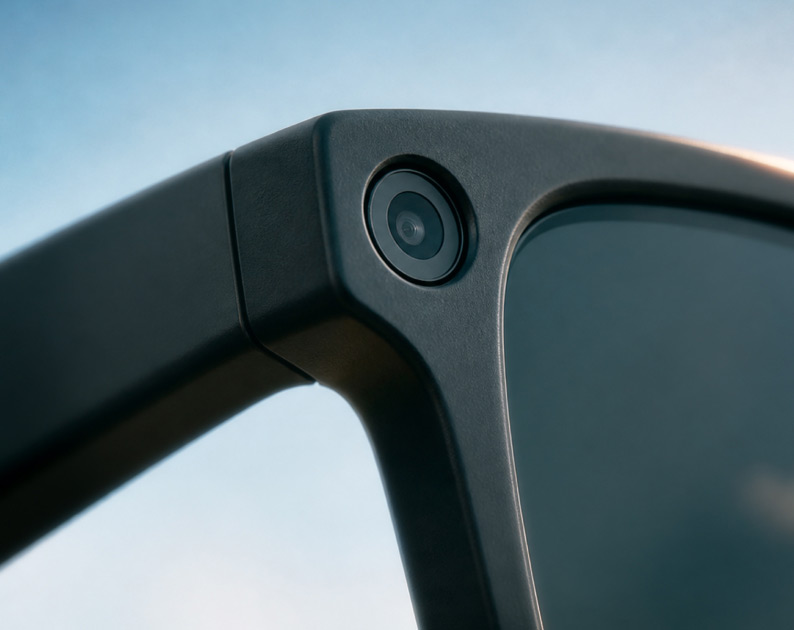
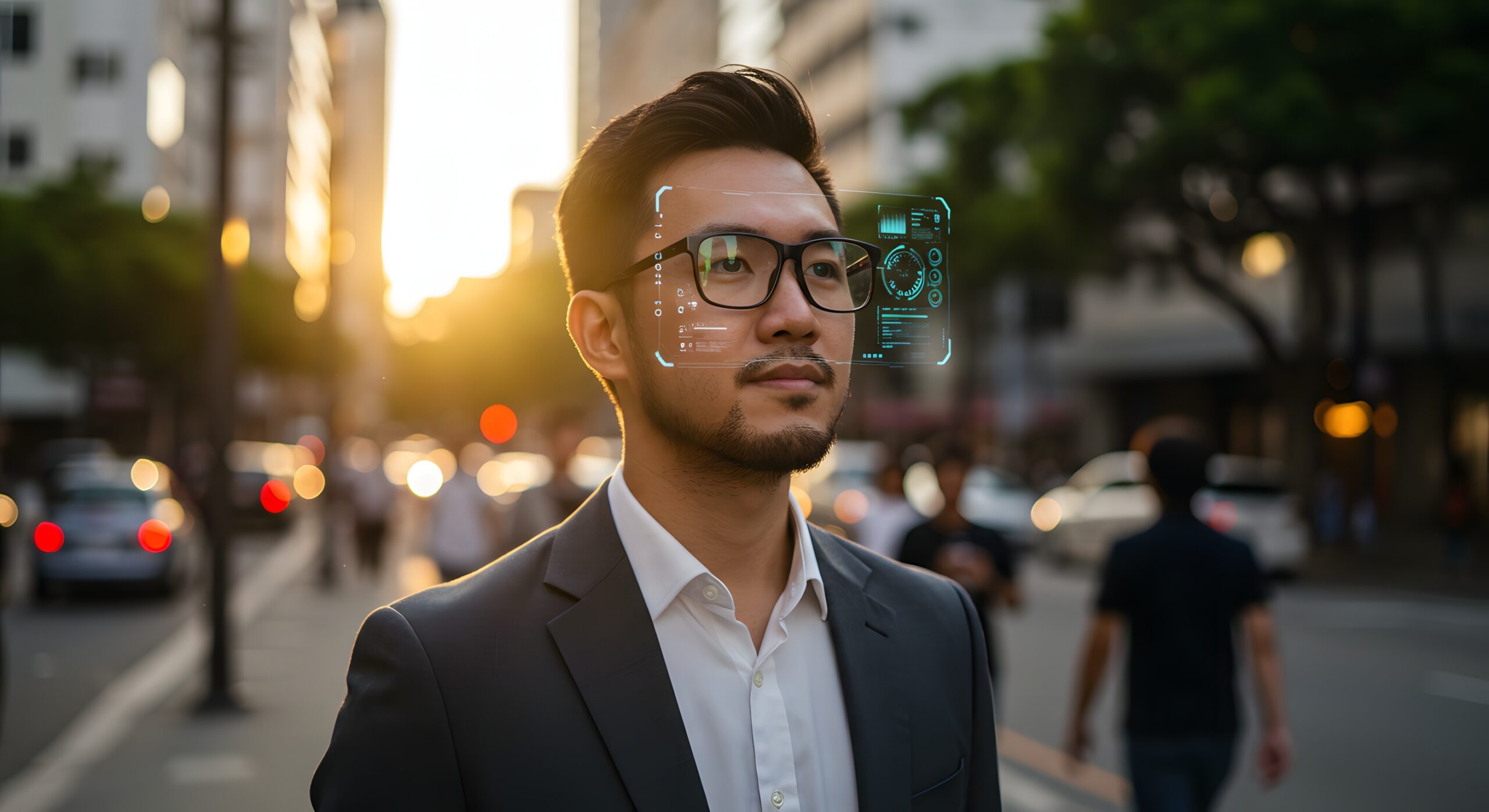
Close up of the camera on a pair of augmented reality glasses.

The smart glasses market is entering a new phase.

Smart glasses have become one of the fastest-moving categories in consumer electronics. 

In recent months, nearly every major consumer technology company has doubled down on smart glasses:

Meta launched its new Meta Glasses collection with EssilorLuxottica. 

Google unveiled Android XR eyewear partnerships with Warby Parker and Gentle Monster. 

Snap introduced its latest generation of AR Specs. 

Across the optical supply chain, companies like Applied Materials and EssilorLuxottica are investing in next-generation technologies designed specifically for smart glasses.

Taken together, these announcements signal something bigger than another product cycle. What was once viewed as an experimental category is rapidly evolving into a mainstream product, driven by advances in artificial intelligence, display technology and semiconductor performance.

Industry data points in the same direction. Counterpoint Research reported record shipments of augmented reality smart glasses in 2025, while Citi Research forecasts that AI glasses could reach 112 million units annually and $40 billion in market revenue by 2030. 

As the market matures, expectations change. The first generation proved smart glasses could work. The next generation has to prove people want to wear them every day.

That means building products that perform everywhere people do – from bright sidewalks to shaded streets, from the office to your car. Lighting conditions constantly change throughout the day, affecting comfort, display visibility and the overall user experience.

Consumers are already familiar with photochromic lenses that darken automatically in sunlight. But smart glasses today demand something more. Instead of simply reacting to UV light, future lenses will need to intelligently adapt to changing environments while balancing glare reduction, display visibility and energy consumption.

Recent optical platform announcements from suppliers such as Applied Materials are starting to include integrated electronic dimming technologies alongside waveguides, vision correction and sensing – highlighting that adaptive light management is becoming an increasingly important part of the smart eyewear stack.

This is where dynamic glass comes in. 

Miru’s dynamic glass platform uses electrochromic technology to actively manage light at the lens level, reducing glare, and improving display visibility as lighting conditions change. It transforms the lens from a passive component into an active part of the user experience.

Designed for next-generation smart eyewear, Miru’s platform is built around the requirements that matter for this market: low haze, neutral colour performance, low-voltage operation, minimal energy demand, and compatibility with light, compact and curved form factors.

The conversation around smart glasses is no longer just about AI, displays or processors. It is about creating products people can wear comfortably, naturally and confidently throughout the day.

As smart eyewear moves toward mainstream adoption, the glass will play a much bigger role.

Learn more about Miru dynamic glass here: https://mirucorp.com/industries/wearables-augmented-reality/

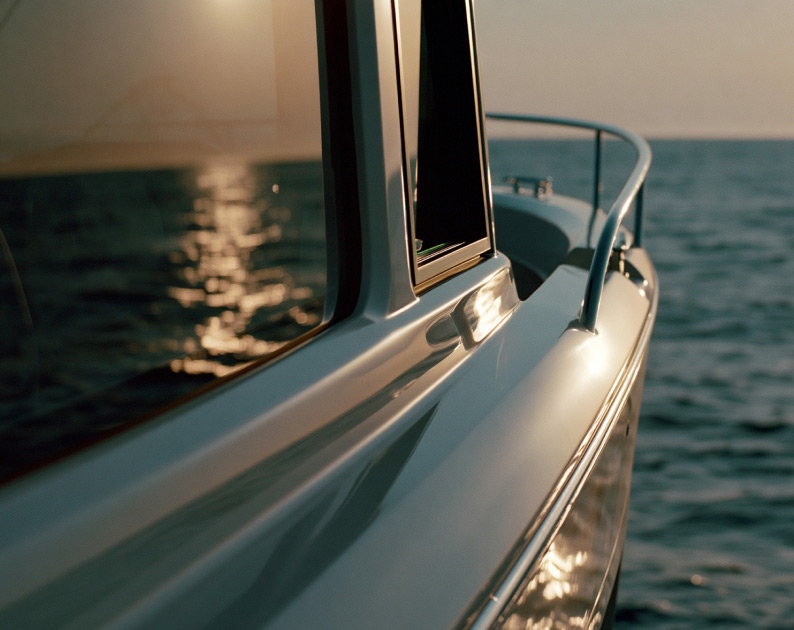
Close up of the windows on the side of a boat cabin reflecting the setting sun and water.

Visibility changes on the water. Glass should too.

This is part of a series exploring how Miru dynamic glass is being applied across industries including automotive, marine, wearables, and autonomous systems. 

Marine transportation depends on visibility. From ferries and tugboats to yachts and commercial fleets, operators need to read the water, track nearby vessels, approach docks, and respond to changing conditions in real time.

The marine environment presents a unique challenge. Sunlight behaves differently on the water, where reflections intensify glare and conditions change throughout the day. A clear view in the morning can become harsh and distracting by midday, then low-angle glare by sunset. 

Marine windows need to do more than provide a view. They need to actively manage light, reduce glare, support safer navigation, and keep passengers comfortable as sun angles and weather conditions change. 

Miru’s solution is designed for exactly these conditions.

Miru’s dynamic glass technology transforms marine windows from a passive material into an intelligent surface that automatically adapts to changing light throughout the day.

Instead of forcing operators to choose between bright glare, fixed tint, aftermarket films, or mechanical shades, Miru dynamic glass continuously adjusts its tint. The technology enables precise tint transitions in increments as small as 0.2%, moving from clear to darkened states based on changing sunlight and user preferences.

For marine operators, that means more control over visibility from sunrise to sunset through a durable, integrated glass solution. For passengers, it creates a more comfortable onboard experience, particularly in seating areas exposed to direct sunlight for extended periods.

Beyond improving visibility, Miru dynamic glass can also support more efficient vessel operation. The technology maintains a stable tint without a constant flow of power. Because energy is only required during transitions, Miru dynamic glass can help reduce solar heat gain and lower the load on onboard cooling systems. 

For decades, marine windows have simply let light in. The next generation of marine glass will actively manage it. Miru is helping bring that future to the water, today.

Explore how Miru dynamic glass is being deployed across different industries like marine, industrial transport, architecture, automotive and more: https://mirucorp.com/industries/marine-industrial/

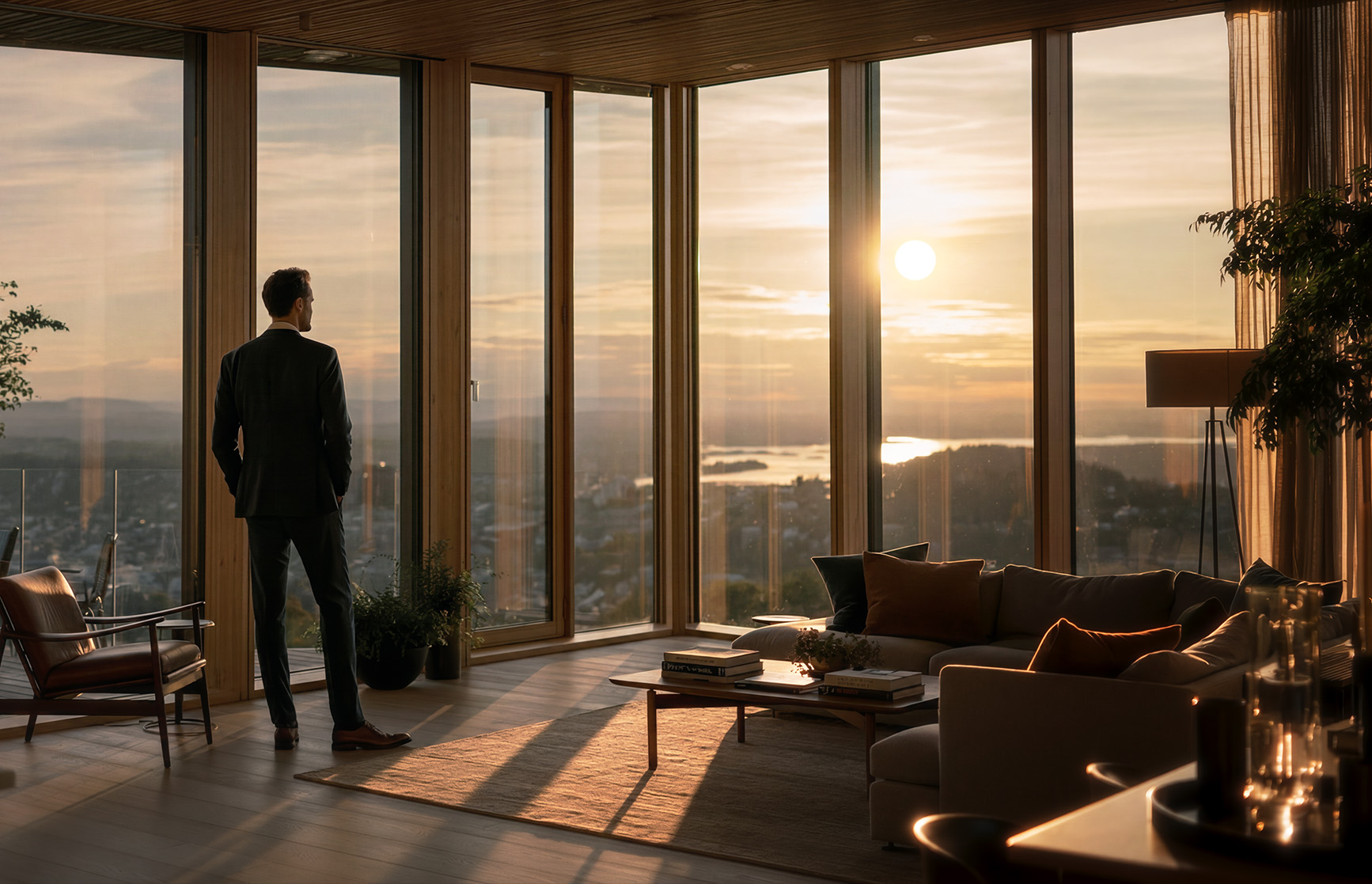
Man in a suit in a luxury apartment looking out large windows at the setting sun.

The future of windows is dynamic

This is part of a series exploring how Miru dynamic glass is being applied across industries including automotive, architecture, wearables, and autonomous systems. 

Buildings today depend heavily on glass. From skyscrapers to airports, academic buildings, and hospitals, expansive windows and glazing have become a defining feature of contemporary architectural design: expanding the view for those on the inside while connecting them with natural light from the outside. 

But with static windows and light come familiar challenges: glare, heat, and high energy bills.

Sharp sunlight creates glare, requiring the costly installation of shades that have breakable parts and spoil the aesthetics. Room temperatures soar, forcing climate-control systems to work overtime to keep the space comfortable, and in some cases, livable. Even in residential buildings, this push and pull boosts the electricity bill by 25 percent.

The environmental cost is also high. Heating, cooling, and lighting buildings accounts for 27% of global greenhouse gas emissions, while building operations generate more than 10 gigatons of CO₂ annually. Improving the performance of windows represents one of the most direct opportunities to reduce that impact.

Windows are overdue for a revolution. 

Not since the 1970s, when low-emissivity (“low-E”) windows first became available, has this critical architectural component been examined and adapted to reflect modern life. 

Low-E windows, which are tinted using thin films applied to glass, are still widely used today, but they are static. They do not react to conditions around them. Because windows are expensive to replace regularly, builders and customers need an adaptive solution that can change with the sun’s position.

Miru’s dynamic glass technology uses low-voltage electrical signals to switch the window’s tinting based on the amount of light coming through it. This can happen automatically, or can connect to Smart Home systems and work like a thermostat, letting users input their own settings. There are many advantages to this approach:

Improved durability.  We spray our solution between layers of glass, so there is no visible film applied to the outside. This means no bubbling, no unprotected edges, no degradation due to the elements – and therefore, longer warranties.

Better design flexibility. The spray method gives builders the freedom to use windows of all shapes and curvatures, which are increasingly employed in modern buildings. 

Enhanced aesthetics. Miru’s interlayer is completely colorless. With our ultra-low haze, window views can be enjoyed without interruption. 

Lower carbon footprint. Smart windows can improve a building’s energy efficiency by up to 20%. As adoption grows, dynamic glass has the potential to eliminate up to two gigatons of CO₂ emissions annually while creating more comfortable and sustainable buildings.

Crystal-clear, climate-friendly dynamic glass is the next critical step in reducing global energy consumption while providing its people with greater comfort, safety, and well-being. Miru’s dynamic glass technology is driving that revolution.

Explore how Miru dynamic glass is being deployed across different industries: https://mirucorp.com/industries/architectural/

As vehicles become autonomous, visibility becomes critical

As vehicles become autonomous, visibility becomes critical

This is part of a series exploring how Miru dynamic glass is being applied across industries including automotive, architecture, wearables, and autonomous systems. 

Vehicles today are taking on more driving tasks than ever before. Automakers continue to expand the capabilities of Advanced Driver Assistance Systems (ADAS) and move toward increasingly assisted and autonomous driving.

Features such as lane keeping, automatic emergency braking, pedestrian detection, adaptive cruise control, and hands-free highway driving are all powered by ADAS. Together, they help vehicles monitor their surroundings, identify hazards, and support driving decisions in real time.

Cameras have become one of the most important safety systems on modern vehicles, enabling ADAS to “see” and understand the world around them.

Like the human eye, however, cameras are vulnerable to light and glare. Low sun angles, oncoming headlights, and strong reflections can reduce image quality and make it more difficult for systems to accurately interpret their surroundings.

Today, the glass surface protecting these cameras remains static. The surface allows all light to pass through, including the stray and scattered light that causes flare and reduces contrast. Static glass has increasingly become a limitation for camera-based safety systems. 

The same dynamic glass platform behind Miru’s automotive and wearables applications applies here. Miru integrates electrochromic technology directly into the glass surface protecting ADAS cameras, managing incoming light before it reaches the sensors.

This creates two advantages:

Dynamic flare reduction: The dynamic glass responds to changing light conditions, including low sun angles, direct glare, and strong reflections, helping cameras maintain image quality and clarity under all lighting conditions.

Neutral color: ADAS systems rely on color information to interpret traffic signals, brake lights, road signs, and other critical visual inputs. Miru’s technology manages light without introducing significant color distortion.

ADAS performance ultimately depends on the quality of what the camera “sees”. By transforming sensor-facing glass into an intelligent surface, Miru helps create a more reliable foundation for the next generation of assisted and autonomous driving systems.

Explore how Miru Dynamic Glass is being deployed across ADAS, wearables, automotive and other industries: https://mirucorp.com/industries/autonomous-vehicles/

The future of wearables starts with smarter glass

The future of wearables starts with smarter glass

This is part of a series exploring how Miru dynamic glass is being applied across industries including automotive, architecture, wearables, and autonomous systems. 

Smart glasses and augmented reality devices are moving into everyday environments, where they need to perform across bright sunlight, shaded streets, office lighting, vehicles, storefronts, and constant indoor-outdoor transitions. In each of these settings, one factor has an outsized impact on the user experience: light.

Bright sunlight washes out displays. Reflections reduce readability. Rapid transitions between indoor and outdoor environments create inconsistent viewing. 

Many smart glasses today compensate with brighter displays, fixed tint, or added software processing. These approaches can help, but they can also increase power use, reduce comfort, and limit usability.

The better solution starts at the optical glass layer.

Wearable systems rely on transparent surfaces to layer or project digital information onto the physical world. Dynamically controlling glare, brightness, heat, and visible light transmission is critical to system performance.

This is where Miru sees a major shift emerging.

The next generation of wearable devices will not rely on static optical surfaces. They will require intelligent optical control that continuously adapts to changing environmental conditions.

Miru dynamic glass actively manages light in real time for wearable and augmented reality systems.

Our electrochromic platform reduces glare, improves display visibility, and maintains optical clarity across changing lighting conditions, while supporting thin, lightweight, low-power and curved form factors required for seamless wearable integration.

The future of wearables and augmented reality depends on how effectively these devices perform and interact with the physical world around them.

Miru is building the intelligent dynamic glass that drives that transition.

Explore how Miru dynamic glass is being deployed across different industries: https://mirucorp.com/industries/wearables-augmented-reality/


Automotive glass is ready for its next evolution

Automotive glass is ready for its next evolution

This is the first in a series exploring how Miru Dynamic Glass is being applied across industries including automotive, architecture, wearables, and autonomous systems. 

In 2026, Miru will begin commercial deployment of its Dynamic Glass technology in automotive applications – the first major market for a platform designed to support a broad range of intelligent surface applications.

This milestone reflects a broader shift taking place across the automotive industry.

Modern vehicles are increasingly software-defined, sensor-driven, and optimized for performance. Yet the glass surrounding drivers, passengers, cameras, and sensors still behaves largely the way it always has: it either lets light and heat in, or blocks them entirely. Static glass forces the rest of the vehicle to compensate, from cabin cooling to glare management to sensor visibility.

Dynamic Glass changes the role glass can play in the vehicle. 

Miru combines advanced electrochromic technology with intelligent control to create glass that actively responds to changing conditions in real time. 

Panoramic roofs can adapt as sunlight shifts. Side glass can reduce glare without cutting occupants off from the outside world. Sensor-facing surfaces can support clearer, more consistent visibility across changing light conditions. 

Smart glass is not one technology

Smart glass is often treated as a single category, but the differences matter. 

  1. Precise light control

Many smart glass systems are effectively clear or opaque. Miru’s technology enables continuous control of visible light transmission, allowing glass to be tuned smoothly as conditions change, enabling better management of glare, heat, comfort, and energy use.

  1. Optical clarity matters

Drivers, passengers, cameras, and optical systems all depend on consistent visibility. Miru’s electrochromic layers are engineered to minimize haze and avoid color distortion, producing a neutral grey tint and clear, undistorted views.

  1. Built for automotive scale

Performance is only part of the challenge. Automotive glass must be manufactured in large formats, curved geometries, and high-throughput production environments. Miru’s technology is designed to integrate with existing glass manufacturing and lamination lines, supporting the way automotive glass is already produced.

The future of vehicle glass is dynamic

Static glass is increasingly out of place in modern mobility. 

As vehicles become increasingly intelligent, the materials surrounding them must evolve as well. Dynamic Glass represents a broader shift toward adaptive, responsive surfaces designed for the next generation of mobility.

Explore how Miru Dynamic Glass is being deployed across different industries: https://mirucorp.com/industries/automotive/

Meet Adam, Miru’s Self-Driving Lab

Faster discovery, smarter glass: Meet Adam, Miru’s Self-Driving Lab

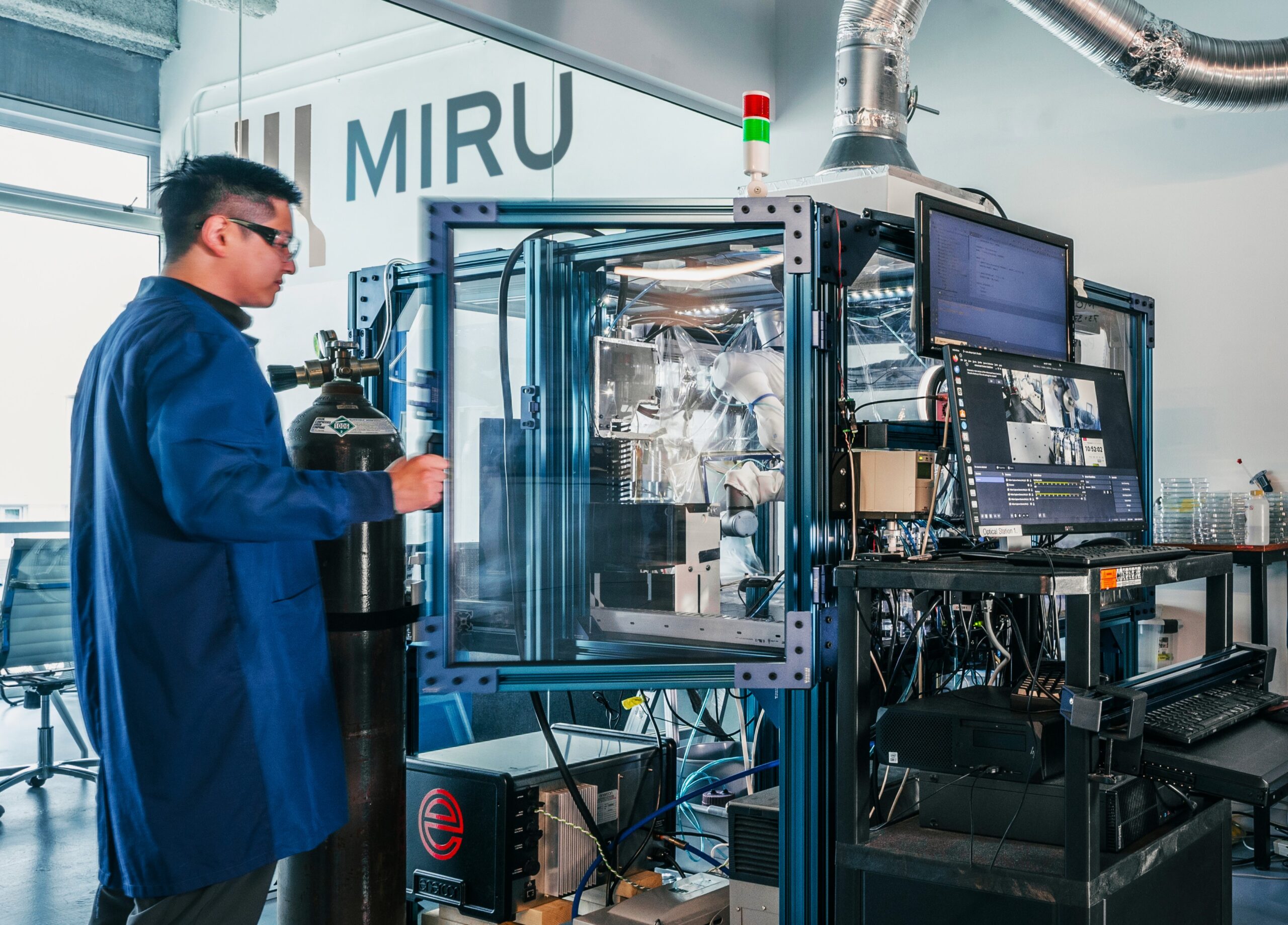
At Miru, innovation is not just about what comes out of our lab – it is how we make the discovery itself faster, smarter, and more scalable. That is where “Adam”, our groundbreaking AI-driven robot scientist, or self-driving lab, comes in. 

Adam is accelerating how we discover and refine the advanced materials behind Miru’s dynamic electrochromic window (“eWindow”) technology. Electrochromic materials may look simple in action – tiny pulses of electricity tinting a window – but they involve millions of variables and years of iteration. Traditionally, it would take decades to move from breakthrough to market.

We decided to accelerate that timeline.

In 2018, our CEO, Curtis Berlinguette, and his team at the University of British Columbia built “Ada”, the world’s first fully autonomous self-driving labs. In collaboration with Jason Hein and Alan Aspuru-Guzik, and backed by an $8 million grant from Natural Resources Canada, Ada could mix, cast, process, test, and analyze materials – and then instantly adjust and repeat. What once took nine months could be compressed into five days.

Adam is the first generation of self-driving labs being used in the materials industry. 

(“Ada” was named after Ada Lovelace; “Adam”, is the Ada-Miru iteration.)

Faster, more powerful, and always learning, Adam runs complex experiments continuously and with frequent microadjustments, freeing Miru engineers and scientists to focus on insights and strategy. Together, human ingenuity and AI speed are pushing the boundaries of what is possible in electrochromic technology.

The result: Miru is uncovering better materials at a record pace – developing smarter, more sustainable eWindows for cars, homes, and buildings around the world.

Miru’s mission is to enhance the well-being of people and the planet. Adam is one more way we are building that future, today.

Read more here: